
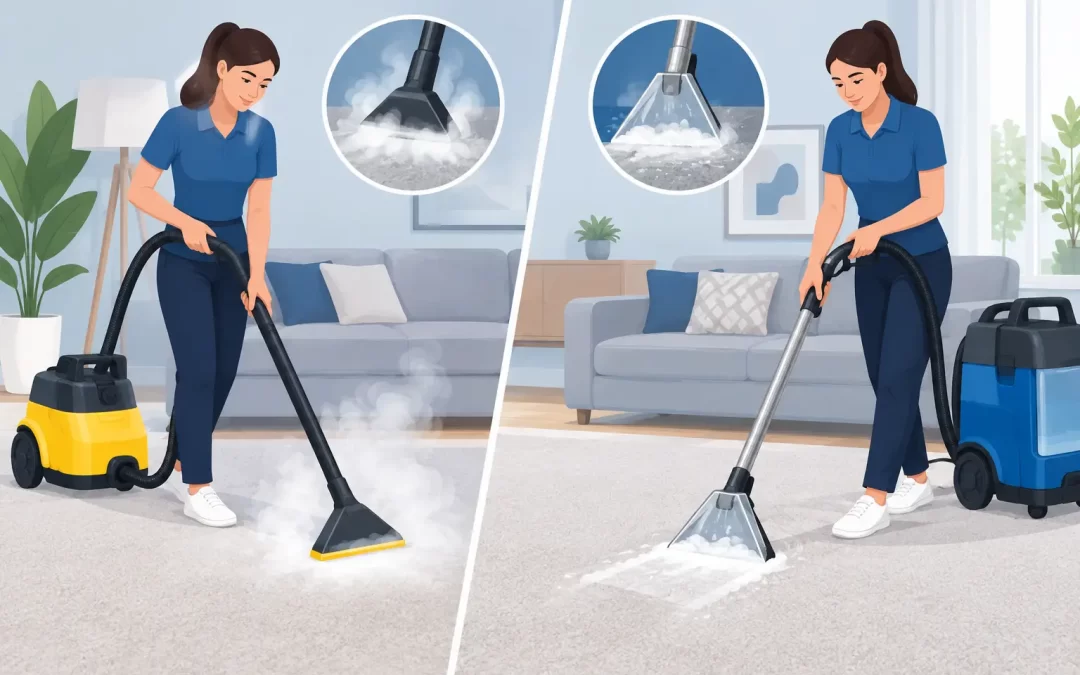
A carpet can look clean after a quick vacuum yet still hold tracked-in soil, food spills, allergens, and residue deep in its pile. When comparing steam cleaning vs shampoo carpet methods, the right choice depends on the carpet’s condition, fiber type, foot traffic, drying requirements, and the cause of the staining. The method that produces the best immediate appearance is not always the one that delivers the best long-term result.
For most maintained residential and commercial carpets, professional hot-water extraction, commonly called steam cleaning, is the preferred option. Shampooing still has a place for particular cleaning challenges, but it requires careful product selection and thorough residue removal to avoid leaving a carpet feeling stiff or attracting more dirt.
Steam Cleaning vs Shampoo Carpet: The Main Difference
Steam cleaning and carpet shampooing both use moisture and cleaning agents to lift soil, but they work differently.
Professional steam cleaning generally refers to hot-water extraction. A technician applies heated water and an appropriate cleaning solution into the carpet, agitates the fibers where needed, then extracts the water, loosened soil, and contaminants using powerful vacuum equipment. Despite the name, this process uses hot water rather than dry steam in most professional carpet-cleaning applications.
Carpet shampooing uses a foaming or liquid detergent that is worked into the carpet pile to loosen dirt. Depending on the machine and process, the shampoo may then be extracted, rinsed, or left to dry before being vacuumed. Older shampoo methods often left noticeable detergent behind. Modern low-residue products and proper rinsing have improved the process, but technique still matters greatly.
The practical difference is simple: hot-water extraction is designed to flush contaminants out of the carpet, while shampooing focuses first on breaking down soil within the pile. A shampooed carpet that is not adequately rinsed may look fresh initially but become soiled again sooner because remaining detergent can hold onto dust and foot traffic dirt.
When Steam Cleaning Delivers Better Results
Hot-water extraction is a strong choice for offices, rental properties, homes with children or pets, and other locations where carpets receive regular use. It reaches below the visible surface and removes a high volume of embedded particulate soil.
Deep Soil and High-Traffic Areas
Entranceways, hallways, workstations, reception areas, stairs, and living rooms collect dry soil that can slowly wear carpet fibers down. Grit acts like sandpaper when people walk across it. Regular vacuuming removes part of this material, but not all of it.
A professional extraction clean can remove deeply held dirt and help restore the pile’s appearance. This is particularly useful where carpet has become dull, matted, or darker along walking routes. For facilities managers, this can support a more professional presentation while helping protect the investment in floor coverings.
Odors, Allergens, and Spills
When managed correctly, steam cleaning is also effective for odor control and general hygiene. It can remove drink spills, food residue, pet accidents, and the soils that feed odor-causing bacteria. The cleaning solution must be suited to the stain, and heavily affected areas may need pretreatment before extraction.
It is not a guarantee that every odor or old stain will disappear. Some substances permanently alter carpet dyes, while others may have reached the backing, underlay, or subfloor. A professional assessment helps set realistic expectations before cleaning begins.
Less Residue When Properly Extracted
A well-performed extraction process leaves minimal cleaning solution behind. This helps carpets stay cleaner for longer and reduces the risk of a sticky texture underfoot. It also makes hot-water extraction a dependable maintenance method for commercial premises where appearance and consistent results matter.
Where Carpet Shampooing Can Be Useful
Carpet shampooing is not automatically the wrong method. It can work well when used by an experienced operator with suitable equipment, controlled moisture, and a proper rinse process.
Shampoo can be helpful on carpets with oily surface soil, certain heavily soiled sections, or pile that needs agitation to release dirt. A foaming product can give the technician time to work solution through dense fibers before extraction. In many professional jobs, shampooing or prespraying is part of the preparation, followed by hot-water extraction to remove the loosened soil and product.
This combined approach is often more effective than treating steam cleaning and shampooing as competing options. A stained restaurant carpet, a busy office entrance, or a neglected rental unit may need targeted chemistry and mechanical agitation before it can be thoroughly extracted.
The risk comes from overusing shampoo, selecting an unsuitable product, or failing to remove it fully. Too much detergent can leave residue that causes rapid resoiling. It may also make fibers feel crunchy after drying. That is why using a domestic machine without measuring solution carefully can produce disappointing results.
Drying Time: A Practical Decision Point
Drying time often determines which cleaning approach is realistic for a property. A properly cleaned carpet should be damp, not saturated. With good extraction, airflow, and normal indoor conditions, many carpets dry within four to eight hours. Heavy soil, thick pile, poor ventilation, high humidity, and cool rooms can extend that timeframe.
Shampooing can take longer to dry if excess solution or water is used. It can also leave a carpet wetter near edges or in dense traffic lanes. In commercial settings, this creates practical concerns: damp carpets can affect access, create slip risks, and limit when rooms can be used.
For offices, schools, apartment common areas, and customer-facing spaces, scheduling carpet cleaning outside operating hours is often sensible. Air movers, ventilation, and keeping furniture off the carpet until it is dry can speed up recovery and reduce marking.
Carpet Type Matters More Than Many People Expect
Before choosing a method, consider the construction and material of the carpet. Most synthetic commercial and residential carpets tolerate hot-water extraction well when cleaned correctly. Wool, natural fibers, delicate rugs, and carpets with unstable dyes need a more cautious approach.
Too much heat, moisture, or high-alkaline cleaning products can damage sensitive fibers, cause color bleeding, or lead to shrinkage. Loose-backed carpets and carpets installed over older underlay may also require reduced moisture. A reputable cleaner should identify these risks, test an inconspicuous area where appropriate, and adjust the method rather than applying one process to every carpet.
Carpet manufacturer recommendations should also be considered. Some warranties specify approved cleaning methods or cleaning intervals. Following those requirements can help protect the carpet and avoid avoidable disputes later.
Choosing the Right Method for Your Property
For routine maintenance, hot-water extraction is usually the better long-term choice. It offers strong soil removal, reduced residue, and a thorough finish when completed with the right equipment and trained staff. Shampooing can be useful as a treatment step for particular soils, but it should not leave detergent sitting in the carpet.
A practical cleaning plan starts with the use of the space. A low-traffic bedroom may only need periodic professional cleaning, while a busy office lobby may benefit from scheduled maintenance several times a year. Regular vacuuming is equally important because it removes abrasive dry soil before it works deeper into the pile.
For heavily stained or neglected carpets, ask for an inspection rather than assuming replacement is necessary. A professional cleaner can identify whether the issue is removable soil, permanent staining, fiber wear, or damage beneath the surface. That distinction affects both cost and the likely outcome.
Protecting Carpet Appearance Between Cleans
Professional cleaning works best alongside daily care. Vacuuming high-traffic areas several times each week prevents grit from being ground into the fibers. Entrance mats reduce the amount of moisture and outdoor dirt brought indoors, while prompt attention to spills limits the chance of permanent staining.
Avoid over-wetting a spill with household cleaner. Blot it with a clean white cloth, work from the outside toward the center, and do not scrub aggressively. Scrubbing can spread the stain, distort the pile, and damage carpet fibers. If a spot returns after drying, the spill may have penetrated deeper and need professional extraction.
The best carpet-cleaning method is the one that removes soil safely, suits the carpet’s construction, and fits the way your property operates. For most homes and facilities, a properly planned hot-water extraction service provides the dependable, clean finish needed to keep carpets presentable and working harder for longer.