
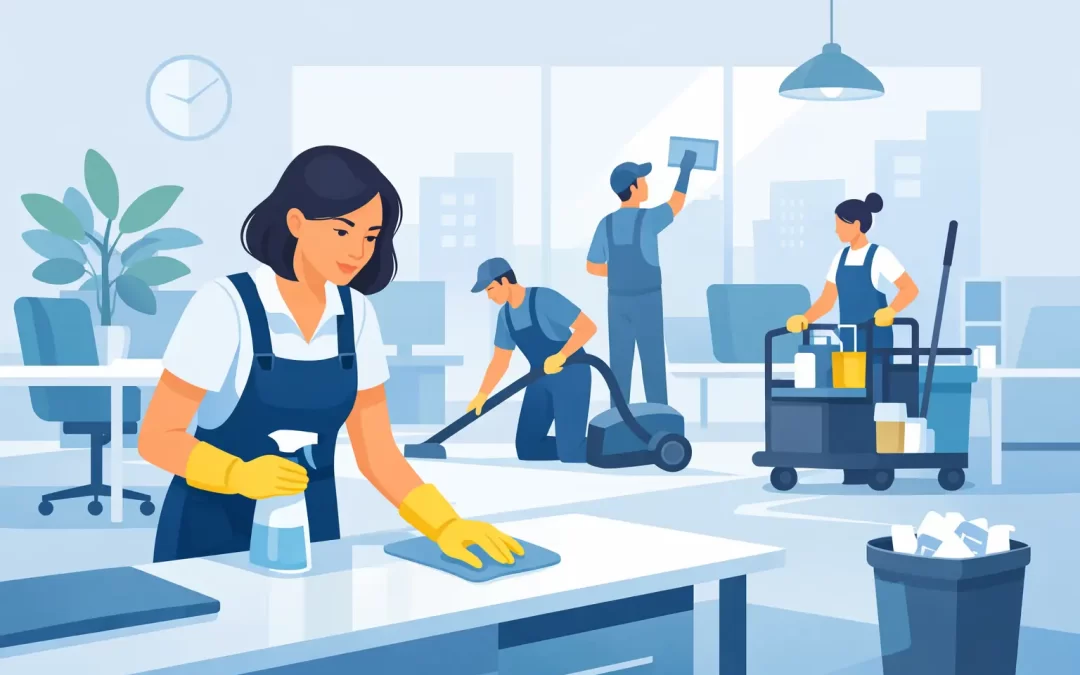
A restroom that looks clean at 9 a.m. can be unhygienic by lunchtime. A carpet can appear presentable while holding weeks of tracked-in soil, and shared keyboards can pass from one user to another all day. The best office cleaning frequencies are not a single checklist applied to every building. They are a practical plan based on foot traffic, workplace use, customer expectations, and the level of hygiene your operation needs to maintain.
For facilities managers and business owners, the goal is consistency without paying for unnecessary work. Too little cleaning affects staff confidence, visitor impressions, and the condition of your property. Too much attention in low-use areas can strain a budget without producing a meaningful benefit. The right schedule protects both standards and value.
How to Set the Best Office Cleaning Frequencies
Start by looking at how people actually use the building, rather than how often you would like it cleaned in theory. A small office with six employees who work remotely several days a week has different needs from a customer-facing office, a medical administration center, or a busy shared workspace.
Four factors should guide the cleaning plan: the number of people on site, the number of visitors, the type of work carried out, and the building layout. Restrooms, kitchens, entrances, and shared workstations require the closest attention because they experience repeated use. Private offices, storage rooms, and meeting rooms used occasionally can usually follow a lighter schedule.
Cleaning frequency should also reflect the hours of operation. A workplace open late, operating shifts, or receiving deliveries throughout the day may need daytime cleaning support as well as an evening service. In contrast, a conventional office may be well served by scheduled after-hours cleaning and targeted daytime checks.
Daily Cleaning for High-Use Areas
Daily cleaning is the foundation for most active offices. It keeps visible dirt under control, removes waste, and gives staff and visitors confidence that the workplace is properly maintained.
Restrooms should generally be cleaned and restocked daily, with more frequent checks in busy buildings. Toilets, sinks, faucets, dispensers, door handles, and floors all need attention. If restrooms serve a large team or public visitors, a single end-of-day clean may not be enough. Midday checks for supplies, spills, odor, and touchpoint disinfection are a sensible addition.
Kitchenettes and break rooms also need daily care. Countertops, tables, sinks, appliance handles, and frequently used touchpoints should be cleaned each day. Trash and food waste must be removed daily to prevent odors and pests. In offices where staff prepare meals regularly, the microwave interior, refrigerator handles, and dining surfaces deserve closer attention than they would in a rarely used coffee station.
Entryways, reception areas, and main corridors benefit from daily vacuuming, sweeping, or mopping depending on the flooring. These are the areas that create the first impression and collect the most outdoor debris. During wet weather, entrance floors may require spot cleaning several times a day to maintain appearance and reduce slip risks.
Shared desks, keyboards, phones, printer controls, elevator buttons, door handles, and meeting-room touchpoints should be cleaned daily in most offices. High-touch disinfection is particularly valuable during periods of increased illness or when workstations are shared between shifts. It should support, not replace, regular handwashing and sensible workplace hygiene practices.
Weekly Tasks That Protect Office Standards
A weekly service goes beyond the daily reset. It handles buildup that may not be obvious every day but becomes noticeable quickly if ignored.
For many offices, this is the right interval for detailed dusting of accessible surfaces, cleaning interior glass, wiping baseboards in key areas, and addressing fingerprints on doors and partitions. Weekly cleaning also provides time for a more thorough restroom and kitchen treatment, including fixtures, tile edges, cabinet fronts, and the exterior of appliances.
Meeting rooms should receive a detailed weekly clean even when they are not used every day. Tables, chairs, presentation equipment, whiteboards, and glass partitions can show marks that undermine a professional setting. If clients visit frequently or meetings are held daily, these rooms may need a quick clean after each use as well.
Hard floors usually require a more detailed weekly mop or machine clean, depending on their condition and level of traffic. Daily mopping removes surface soil, but periodic deeper cleaning helps prevent dullness and grime accumulation around edges and under furniture.
Monthly and Quarterly Deep-Cleaning Work
Monthly tasks keep an office from slowly looking worn despite regular daily cleaning. This is a good time to clean low-touch surfaces, ledges, vents, light switches, interior doors, and areas behind movable furniture. Upholstered seating, blinds, and interior windows may also need scheduled attention, especially in customer areas.
Carpets require a different approach. High-traffic paths should be vacuumed frequently, often daily, but periodic professional carpet cleaning is what removes embedded soil and helps maintain appearance. A busy office may benefit from deep carpet cleaning every three to six months. Lower-traffic offices may be able to schedule it once or twice a year. The deciding factors are foot traffic, weather, food and drink use, and whether clients regularly enter the space.
Hard floors may need machine scrubbing, polishing, or refinishing on a quarterly or semiannual basis. This depends heavily on the floor material. Vinyl, tile, natural stone, and wood all have different maintenance requirements. Using the wrong chemical or frequency can damage the finish, so floor care should be matched to the manufacturer’s guidance and the condition of the surface.
Windows, blinds, and high-level dusting are often planned quarterly or semiannually. However, buildings near construction, busy roads, or exposed parking areas can need more frequent exterior and entrance-glass cleaning. Clean windows matter more than many teams expect. They improve daylight, presentation, and the perceived quality of the entire office.
A Practical Frequency Guide by Area
The following schedule is a useful starting point for a typical occupied office. It should be adjusted after a short review of traffic patterns and problem areas.
- Restrooms, trash removal, kitchen surfaces, entrances, shared touchpoints, and main floors: daily, with additional checks in high-traffic locations.
- Desks, private offices, meeting rooms, interior glass, and detailed dusting: weekly, or more often where spaces are shared or client-facing.
- Vents, blinds, upholstered furniture, low-use rooms, and detailed edge work: monthly or as needed.
- Carpet extraction, floor machine cleaning, high-level dusting, and thorough window cleaning: quarterly, semiannually, or according to site conditions.
This guide is not a substitute for inspection. If a reception area looks untidy by noon, it needs more frequent service regardless of what the original schedule says. If a boardroom is used twice a month, daily cleaning there is unlikely to be the best use of resources.
When More Frequent Cleaning Is Worth It
Some workplaces should set a higher baseline from the outset. Customer-facing businesses, healthcare-adjacent offices, childcare administration sites, shared workspaces, call centers, and buildings with dense occupancy all benefit from more regular cleaning and disinfecting. So do offices that host training sessions, interviews, or events.
Seasonality matters too. Rain and snow increase the need for entrance and floor care. Allergy season may justify more detailed dust control. Cold and flu periods can call for additional attention to shared touchpoints and restrooms. A flexible contract is often more useful than a fixed schedule that cannot respond to changing conditions.
Supply management is part of the same picture. Even the best cleaning routine falls short when soap, paper products, liners, or sanitizer run out. Coordinating service with reliable hygiene and janitorial supplies reduces avoidable complaints and saves the facilities team from last-minute purchasing.
Build a Schedule That Can Be Checked
A cleaning schedule should be clear enough that managers, cleaners, and building users understand what is covered and when. Define the areas, tasks, frequency, service hours, and reporting process. Then review the plan after the first month. Complaints, supply use, visible soil, and staff feedback will quickly show whether the frequencies are right.
Aaroma approaches office cleaning as an operational service, not simply a checklist. With more than 25 years of experience, trained teams can help match routine cleaning, specialist floor care, carpet cleaning, window cleaning, and hygiene supply support to the real demands of a site.
The most effective office cleaning schedule is the one that keeps standards high on an ordinary busy day, not just immediately after a deep clean. Review what your people and visitors touch, see, and rely on every day, then set frequencies that keep those areas ready for work.