
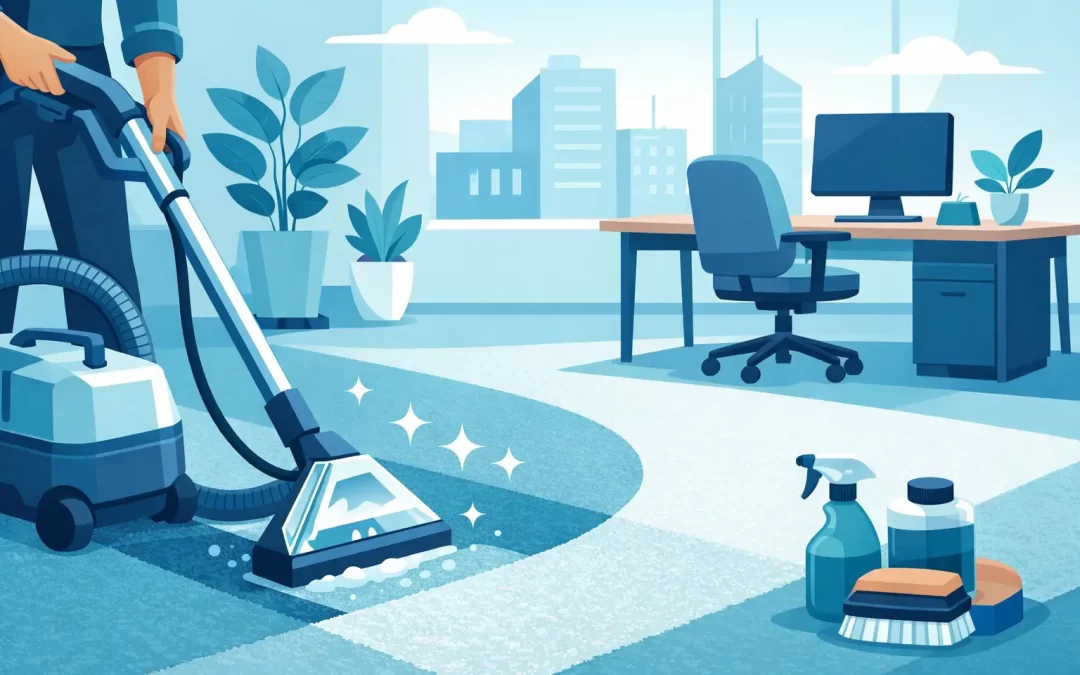
Coffee by the copier, rain tracked in from the parking lot, toner dust near shared printers, and constant foot traffic from staff and visitors – office carpets take more punishment than most businesses realize. Carpet cleaning for offices is not just about keeping floors looking presentable. It helps protect indoor air quality, extend carpet life, reduce odors, and support a cleaner working environment that staff and clients notice straight away.
For facility managers and business owners, the real question is not whether office carpets need professional attention. It is how often they need it, what method makes sense for the space, and how to get reliable results without disrupting the workday.
Why carpet cleaning for offices matters more than it seems
Office carpeting works like a filter. It traps soil, dust, moisture, allergens, and fine debris that would otherwise stay airborne. That can be useful up to a point, but once carpets become overloaded, they start to look tired, smell stale, and release particles back into the space through daily foot traffic.
The visual side matters too. Carpets cover a large portion of most office interiors, so when they are marked, dull, or heavily worn in walkways, the entire workplace can feel neglected. That affects first impressions for clients and can also influence how staff feel about the cleanliness of the building overall.
There is a cost issue as well. Replacing commercial carpet is expensive, disruptive, and rarely urgent until it suddenly becomes unavoidable. Regular professional cleaning helps remove abrasive grit that breaks down carpet fibers over time. In practice, that means better appearance now and slower wear later.
What builds up in office carpets
Most office carpet contamination is not dramatic. It is gradual, which is why it often gets underestimated. Fine grit from outside settles into entrance areas and main walkways. Food crumbs and beverage spills collect in deskside areas, break rooms, and meeting rooms. Dust from ventilation, paper handling, and general office activity settles into fibers every day.
Then there are the less obvious issues. Moisture tracked in during wet weather can lead to lingering odors if not handled properly. Shared spaces may carry bacteria from shoes and spills. In high-density offices, carpeted floors can hold onto a surprising amount of debris even when they are vacuumed regularly.
Daily cleaning is still essential, but vacuuming alone cannot fully remove oily residues, embedded dirt, or staining. That is where scheduled deep cleaning makes the difference.
How often should office carpets be professionally cleaned?
There is no one-size-fits-all schedule. It depends on traffic levels, the type of business, weather exposure, carpet color, and the standard you need to maintain.
A low-traffic office with strict no-food policies may only need periodic deep cleaning paired with strong routine maintenance. A busy reception area, call center, medical office, school office, or multi-tenant commercial building will usually need far more frequent attention. Entry points, corridors, waiting areas, and under-desk zones often wear at different rates, so a full-building approach is not always the most cost-effective option.
In many offices, a practical plan includes regular vacuuming, prompt spot treatment, and scheduled professional cleaning for high-traffic zones more often than low-use rooms. That targeted approach controls costs while keeping the visible areas at a good standard.
The main carpet cleaning methods for offices
The right method depends on the carpet type, soil level, drying time required, and how the space is used.
Hot water extraction
This is one of the most effective methods for deep cleaning commercial carpet. It uses heated water and cleaning solution to loosen soil, followed by strong extraction to remove dirt and moisture. It is especially useful for restoring heavily used carpet and removing buildup that routine maintenance leaves behind.
The trade-off is drying time. In an office that runs around the clock or has limited ventilation, that needs to be planned properly. Used correctly, though, it delivers a thorough clean and can significantly improve appearance.
Low-moisture cleaning
Low-moisture methods are often chosen where fast turnaround is a priority. These systems use less water, which means quicker drying and less disruption. They can work well for maintenance cleaning in offices that need carpets ready again quickly.
That said, low-moisture cleaning is not always the best answer for heavily soiled carpet. If there is deep buildup, staining, or odor issues, a more intensive method may still be needed.
Spot treatment and stain removal
Not every carpet issue calls for full-area cleaning. Localized treatment for coffee, ink, food, or tracked-in marks can solve the immediate problem before it becomes permanent. The key is speed and using the right treatment for the stain type. Aggressive products or incorrect techniques can set stains, damage backing, or leave residue that attracts more dirt.
Choosing the right plan for your office
The best carpet maintenance plans are based on how a building actually operates, not on a generic schedule. An office with heavy client traffic has different needs than a back-office admin site. A law office may care most about presentation. A warehouse office may need more frequent soil removal near entrances. A managed property may need a plan that supports multiple tenants while staying within budget.
A sensible approach starts with a site assessment. That should consider traffic patterns, carpet condition, access, cleaning windows, and any compliance or health and safety requirements. From there, the work can be scheduled around business needs, whether that means after-hours service, weekend cleaning, or rotating attention between high-priority areas.
This is where an experienced contractor adds value. Good office carpet cleaning is not just about equipment. It is about knowing when to deep clean, when to maintain, and when to focus on specific zones rather than treating every space the same way.
What businesses should expect from a professional service
Professional carpet cleaning should deliver more than a machine pass over the floor. At a minimum, businesses should expect clear communication, realistic scheduling, proper stain assessment, safe product use, and a method suited to the carpet rather than a one-method-fits-all approach.
Drying times should be explained upfront. So should access requirements, furniture limitations, and any areas where staining may improve but not disappear fully. Honest advice matters. Some marks are removable. Others are permanent due to bleach damage, wear, or previous treatment attempts.
Reliability also matters as much as the clean itself. Commercial clients need contractors who arrive when agreed, work safely, and leave areas fit for use. For many businesses, the ideal provider is one that can also support wider cleaning and hygiene requirements, reducing the need to manage multiple suppliers.
Common mistakes that shorten carpet life
One of the biggest mistakes is waiting until carpets look bad before acting. By that point, soils are already embedded, fibers are under strain, and stains may be harder to remove. Another is treating every mark with off-the-shelf spotters that are not suitable for commercial carpet.
Poor vacuuming routines also create problems. If grit is left sitting in fibers day after day, foot traffic grinds it deeper and increases wear. Entrance matting is often overlooked too, even though it can cut down a large amount of tracked-in dirt before it reaches the carpet.
Finally, some businesses choose cleaning on price alone and end up with wet carpets, recurring stains, strong chemical odors, or inconsistent results. Value for money comes from good outcomes, proper care, and fewer problems afterwards – not just the lowest quote.
Carpet cleaning for offices as part of a bigger maintenance standard
Office carpets do not exist in isolation. Their condition is tied to the wider cleaning standard of the building. Dirty windows, dusty vents, neglected hard floors, and poor restroom hygiene all affect how the space is perceived. The opposite is true as well. When carpets are clean, fresh, and properly maintained, the whole office feels better managed.
For that reason, many businesses treat carpet care as part of a broader facilities plan rather than a one-off reactive job. That makes sense operationally. It supports appearance, helps with asset protection, and creates a cleaner setting for staff and visitors throughout the year.
Aaroma works with businesses that want that practical, dependable approach – cleaning that fits the building, the schedule, and the standard expected on site. For procurement teams and facilities managers, that kind of consistency is usually worth far more than a quick cosmetic fix.
If your office carpet is starting to show wear, hold odors, or make the whole space look older than it is, it is usually a sign to act sooner rather than later. A planned professional clean can restore the look of the space, protect the flooring investment, and make everyday maintenance easier from that point on.