
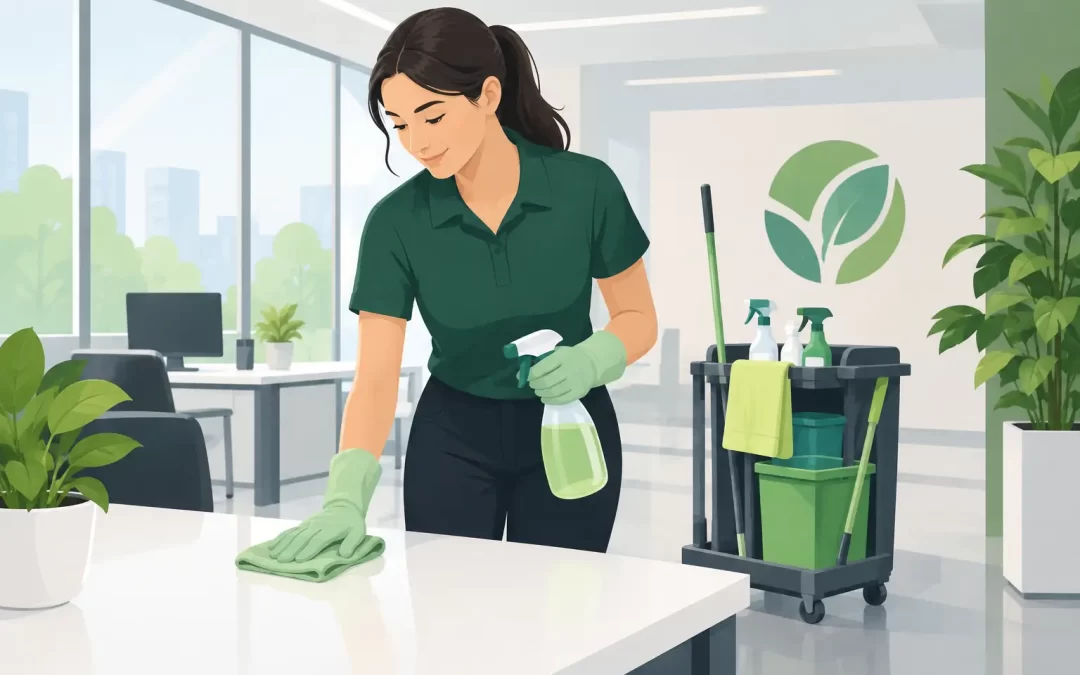
A facility can look clean while still using more chemicals, water, packaging, and labor than necessary. Sustainable cleaning is the practical process of reducing that waste without lowering hygiene standards, damaging surfaces, or making daily operations harder. For offices, residential properties, retail spaces, and shared buildings, the best approach is one that produces visible, consistent results and holds up under real use.
What Sustainable Cleaning Means in Practice
Sustainable cleaning is not simply switching every bottle to one labeled “green.” It is a planned system covering products, dilution, equipment, staff methods, storage, waste handling, and purchasing. The goal is to use the right resource, in the right amount, for the right task.
That distinction matters. A heavily soiled restroom, commercial kitchen, carpeted reception area, or high-touch shared workspace may need specialist products and procedures to meet hygiene requirements. Sustainable practice does not mean under-cleaning or avoiding disinfectants where they are genuinely needed. It means avoiding unnecessary product use, repeat work, and preventable waste.
For a facilities manager, the benefits are operational as well as environmental. Better product control can reduce chemical spend. Reusable tools can cut disposables. Proper maintenance can extend the life of floors, carpets, furniture, and equipment. Cleaner indoor air and fewer strong odors can also improve the experience for staff, visitors, residents, and customers.
Start With the Cleaning Tasks That Use the Most Resources
The most effective changes usually begin with a site review rather than a shopping list. Look at which areas receive the most foot traffic, consume the most supplies, or generate the most complaints. These are often restrooms, break rooms, entryways, shared desks, elevators, hard floors, and waste collection points.
Cleaning frequencies should reflect risk and use. High-touch points may require regular attention throughout the day, while low-traffic areas may not need the same intensive routine. This prevents a common problem: staff applying the same amount of product and labor everywhere, regardless of the actual need.
Surface type also matters. Natural stone, sealed wood, vinyl, carpet, glass, stainless steel, and upholstery all respond differently to chemicals and abrasive tools. Selecting a product that is too aggressive can lead to etching, fading, residue buildup, or a shorter replacement cycle. Replacing damaged flooring or furnishings carries a far greater environmental and financial cost than using the correct cleaning method from the start.
Choose Products for Performance, Safety, and Waste Reduction
A sustainable product should still do its job. Fragrance, packaging design, or a broad environmental claim should never be the only basis for purchase. Review whether a product is suitable for the surface, the soil type, the required contact time, and the building’s hygiene needs.
Concentrated products can be a sensible option for regular contract cleaning because they reduce storage space, packaging, and transportation weight. However, they only deliver those benefits when dilution is controlled. Over-diluting can leave surfaces dirty and create repeat work. Under-diluting wastes chemicals, may leave residue, and can create avoidable safety issues.
Closed-loop dispensing systems, clearly labeled bottles, and measured dilution equipment help teams get consistent results. They also make it easier to train new staff and monitor stock use across a site.
For routine low-risk cleaning, products with lower odor and appropriate environmental credentials may improve comfort in occupied spaces. But there is no one-product answer for every job. Disinfection, grease removal, floor restoration, graffiti removal, and kitchen canopy cleaning can demand specialist chemistry. The responsible choice is the least intensive product and method that can safely achieve the required standard.
Sustainable Cleaning Depends on Better Tools
Tools often have as much impact as chemicals. Quality microfiber cloths and mop heads can lift dust, dirt, and bacteria effectively when they are used, laundered, and color-coded correctly. They can reduce reliance on disposable wipes and limit cross-contamination between restrooms, kitchens, general areas, and touchpoint cleaning.
Vacuum cleaners with effective filtration can help capture fine dust rather than recirculating it into occupied areas. For carpet care, regular vacuuming and prompt spot treatment reduce the need for aggressive restorative cleaning later. Similarly, entrance matting is a practical sustainability measure: stopping grit and moisture at the door protects internal floors and lowers cleaning demand throughout the building.
Water use deserves the same attention. A pressure washer can be highly effective for exterior work, but it should be selected and operated for the surface, the level of soiling, and local runoff requirements. Using excess pressure can damage render, joints, wood, and painted finishes. In many cases, correct pre-treatment, controlled water flow, and skilled operation achieve a better result with less risk.
Reduce Single-Use Waste Without Reducing Hygiene
Single-use products have a place where infection control or specific site procedures require them. In all other cases, review whether reusable alternatives can meet the same standard. The key is to support reuse with a proper collection, storage, and laundering process. Reusable cloths that are not cleaned correctly are not a sustainable solution.
Waste stations should be simple enough for users to understand. Clear labeling, appropriate bin sizes, and regular servicing reduce contamination in recycling and prevent overflowing waste areas. In offices and multi-tenant buildings, the most practical improvement is often placing the right bin where the waste is actually produced, rather than relying on one central station that people may not use.
Procurement teams can also reduce waste by standardizing core consumables. Fewer compatible dispenser formats, consistent refill sizes, and planned deliveries make inventory easier to manage. This helps prevent half-used products from being discarded because a site has changed brands or equipment.
Train for Consistency, Not Just Speed
A cleaning specification only works when the people delivering it understand the purpose behind it. Staff should know how to read product labels, use personal protective equipment, follow dilution instructions, separate tools by area, and report damaged surfaces or recurring hygiene issues.
Training should also cover dwell time. Many disinfectants need to remain wet on a surface for a stated period to work as intended. Spraying and immediately wiping can waste product while delivering a false sense of security. Equally, routine cleaning and disinfection are not interchangeable. Dirt must often be removed before a disinfectant can perform effectively.
Clear site instructions reduce the temptation to use extra chemical “just in case.” They also make quality checks more meaningful. Supervisors can assess whether the correct method was used, not simply whether an area appears clean at a glance.
Measure What You Want to Improve
Sustainability becomes manageable when it is measured alongside service quality. Start with a few indicators that matter to the property: chemical usage, waste bag consumption, paper product use, water use for specialist tasks, customer complaints, and the number of repeat cleans required.
A monthly review can show where changes are working. For example, a switch to controlled dilution may lower product consumption without affecting inspection scores. If complaints rise after a product change, the issue may be training, product suitability, or an unrealistic cleaning schedule. The answer is not always to revert immediately, but it should be investigated promptly.
It is also worth tracking the condition of high-value surfaces. Floor finish life, carpet appearance, upholstery stains, and restroom fixture damage provide useful evidence of whether the cleaning program is protecting the asset. Sustainable cleaning should help a property stay presentable for longer, not simply reduce the number of bottles in a janitorial closet.
Build a Program That Fits the Building
There is no single sustainable cleaning checklist that suits every property. A busy office with daily visitors has different needs from an apartment building, medical setting, warehouse, restaurant, or managed residential home. Occupancy levels, surface materials, regulatory requirements, working hours, and available storage all affect the right approach.
A dependable cleaning partner can help align routine cleaning, specialist maintenance, supply management, and quality control in one workable plan. Aaroma applies this practical approach by matching professional cleaning methods and supplies to the site rather than treating sustainability as a label added after the fact.
The strongest next step is a focused review of one high-use area, such as restrooms, entrances, or break rooms. Improve the products, tools, training, and waste process there first, then use the results to make confident changes across the rest of the property.