
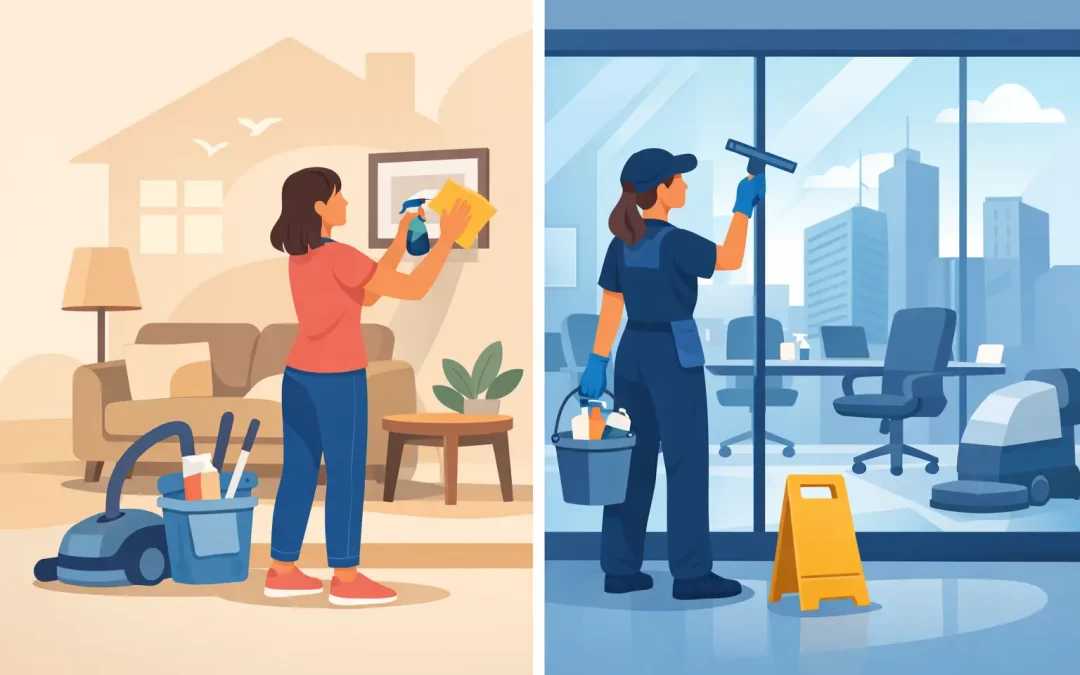
A reception area can look clean at 8:00 a.m. and still fail a workplace hygiene check by lunchtime. A family kitchen can need a completely different level of attention after a busy week at home. That is the central difference in residential vs commercial cleaning: both aim for a clean, healthy space, but the work is planned around different risks, routines, people, and standards.
Choosing the right service is not simply a matter of booking more cleaners or a longer visit. Property managers, facilities teams, business owners, and homeowners need a scope of work that suits how the building is used. When the scope is right, cleaning protects appearance, supports hygiene, and helps prevent small maintenance issues from becoming expensive problems.
Residential vs Commercial Cleaning: What Changes?
Residential cleaning focuses on private living spaces. The work is personal, detail-oriented, and shaped by the household’s routines. Common priorities include kitchens, bathrooms, bedrooms, living areas, dust control, vacuuming, mopping, and maintaining a comfortable home environment.
Commercial cleaning is designed for shared or public-facing premises such as offices, retail units, apartment common areas, medical settings, educational facilities, warehouses, and hospitality spaces. These environments often have higher foot traffic, more touchpoints, stricter site procedures, and fixed operating hours. A cleaner may be working around staff, visitors, deliveries, confidential information, machinery, or customer-facing areas.
The visible result matters in both settings. The difference is that commercial work must also support operational continuity. A poorly maintained office washroom or entrance can affect employee confidence, visitor impressions, and health and safety expectations. In a home, the service may be more flexible, but trust, care around personal belongings, and consistent quality are just as important.
Scope and Frequency Depend on How the Space Is Used
A residential client may book weekly, biweekly, monthly, or one-time cleaning. A deep clean before moving in, after renovation work, or ahead of a special occasion is also common. The cleaner can often focus on the rooms that create the biggest burden for the household, such as bathrooms, floors, kitchen surfaces, and built-up dust.
Commercial sites usually need a more structured schedule. A small office may require evening cleaning several times a week, while a busy workplace or shared building may need daily cleaning, daytime porter support, periodic carpet care, and washroom consumables. Frequency should be based on occupancy, footfall, operating hours, and the type of work carried out on site.
For example, a low-traffic professional office may keep a strong standard with regular vacuuming, waste removal, washroom cleaning, and kitchen care. A customer-facing store might need more frequent attention to entrances, glass, floors, and touchpoints. A residential lobby or apartment building may need a plan that covers common areas without disrupting residents.
More frequent cleaning is not always the best answer. If the main issue is worn floor finish, stained carpet, hard-water buildup, or dirty exterior surfaces, a specialist periodic service may deliver better value than adding routine hours. A reliable contractor should identify the actual need rather than recommend work that does not improve the result.
Equipment, Products, and Specialist Skills
Homes can often be cleaned effectively with compact equipment and carefully selected household-safe products. The priority is using the right method for the surface, especially around natural stone, wood flooring, delicate finishes, upholstery, and personal items.
Commercial cleaning commonly requires larger-capacity equipment, documented product use, color-coded materials, and methods that reduce cross-contamination. Floor machines, carpet extraction equipment, window-cleaning systems, pressure washing equipment, and industrial vacuums may be needed depending on the site. Product choice also matters more where employees, customers, food preparation areas, or sensitive environments are involved.
Specialist tasks sit outside the usual routine clean in either setting. Carpet cleaning, blind cleaning, window cleaning, floor stripping and polishing, power washing, graffiti removal, gum removal, kitchen canopy cleaning, and duct cleaning require specific equipment and trained handling. Treating these jobs as an occasional add-on rather than part of a maintenance plan can lead to avoidable damage or shortened surface life.
For commercial customers, it can be practical to work with one provider that can handle routine cleaning and provide the hygiene, janitorial, washroom, PPE, and waste-management supplies used on site. This reduces ordering complexity and makes it easier to maintain consistent standards across the building.
Safety, Security, and Compliance Matter More in Commercial Settings
Every cleaning job should be carried out safely, but commercial sites usually bring additional responsibilities. Cleaners may need site induction, access procedures, safe storage arrangements, risk assessments, method statements, and clear communication with the facilities team. Cleaning around cables, wet floors, loading areas, food spaces, or equipment requires careful planning.
Security is also a practical consideration. A contractor working in an office may have access to desks, meeting rooms, keys, alarm procedures, or areas containing confidential material. Businesses should choose a provider with clear supervision, dependable staff, suitable insurance, and established procedures for reporting issues.
Residential customers should expect the same respect for security and property. The difference is in the nature of the relationship. Home cleaning is carried out in a private space, so punctuality, discretion, consistency, and clear instructions are especially valuable. A client should feel comfortable explaining priorities, restricted rooms, pet arrangements, or surface-care requirements.
How to Compare Cleaning Quotes Properly
A low price can be attractive, but it is only useful if the work is clearly defined. Whether you are arranging house cleaning or managing a multi-site commercial contract, compare like with like. Ask what rooms or areas are included, how often each task will be completed, whether products and equipment are supplied, and which services are priced separately.
For a commercial quote, clarify service hours, staffing levels, quality checks, reporting, keyholding arrangements, consumable supply, and response times for urgent requests. For residential work, confirm visit length, cleaning priorities, whether the same team is likely to attend, and how deep-cleaning tasks are handled.
It is also worth checking credentials rather than relying on a brief service description. Insurance cover, relevant approvals, experience with similar properties, and a straightforward point of contact all provide reassurance. Aaroma brings more than 25 years of cleaning experience, accredited standards, and substantial insurance cover to residential and commercial work, helping customers manage routine and specialist requirements with confidence.
Choosing the Right Service for Your Property
Residential cleaning is usually the right choice when the goal is a cleaner, more manageable home and the work centers on personal living areas. The best service will be flexible around the household, careful with finishes and belongings, and clear about what can be achieved during each visit.
Commercial cleaning is the stronger fit when a property has staff, customers, tenants, shared facilities, higher footfall, or formal hygiene requirements. It should be planned around the building’s operations, not simply squeezed into an available time slot. A clear schedule, trained staff, appropriate equipment, and regular quality control are what turn cleaning from a basic task into reliable facilities support.
The right decision starts with an honest look at how your space is used. Set the expected standard, identify the areas that need specialist attention, and agree on a scope that can be measured. That gives you a cleaner property today and a more dependable maintenance plan for the months ahead.