
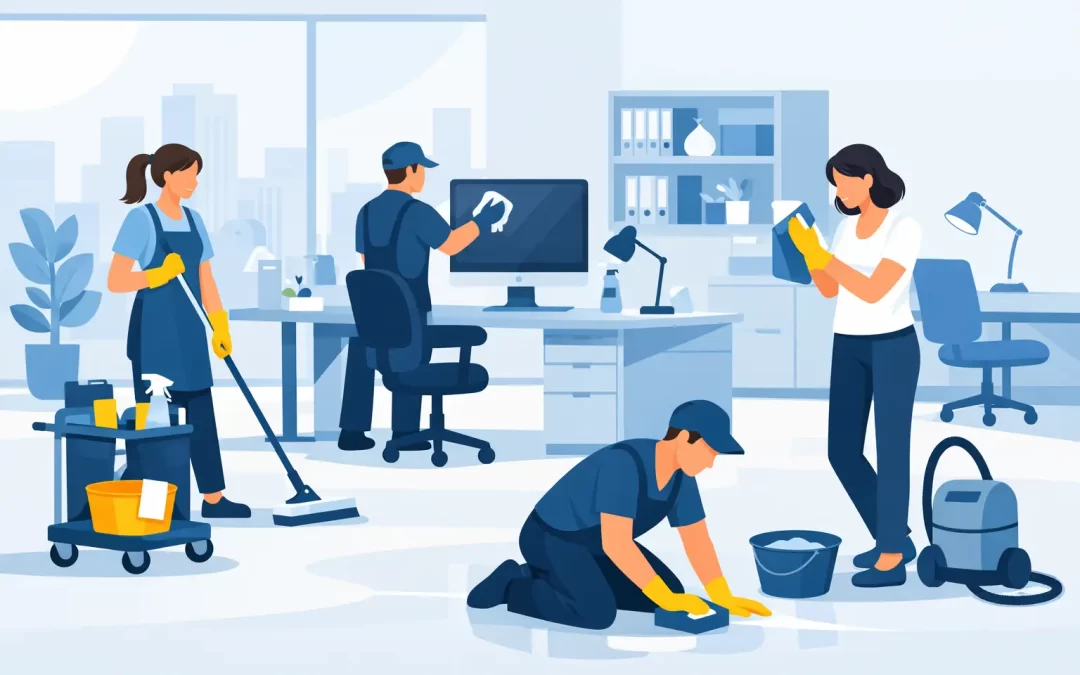
A busy office can look acceptable at first glance while still carrying months of built-up dirt in carpets, shared equipment, kitchens, washrooms, and hard-to-reach areas. This office deep cleaning case study follows a representative commercial cleaning project and shows how a structured reset can improve hygiene, staff confidence, and the appearance of a workplace without bringing operations to a halt.
The scenario is based on common requirements seen in occupied offices rather than one named customer. Client confidentiality matters, but the practical lessons are useful for facilities managers, business owners, and property teams planning a deep clean alongside their regular contract cleaning.
The Brief: A Cleaner, Safer Office Without Downtime
The office was a three-floor workplace with approximately 90 regular staff members, meeting rooms used throughout the day, a staff kitchen on each floor, and a mix of carpeted and hard-floor areas. Routine cleaning was taking place, but the facilities team had noticed that the building no longer reflected the standard they expected for staff and visitors.
The concerns were familiar: carpet traffic lanes looked tired, fingerprints had built up around glass partitions and doors, kitchen surfaces needed more attention, and washrooms required a detailed hygienic clean. Dust was also visible on high-level ledges, vents, blinds, and workstation cable areas. None of these issues alone had closed the office, but together they affected the overall impression of the premises.
The brief was not simply to make the office look better for a visit. The customer wanted a planned deep clean that addressed overlooked areas, supported hygiene standards, and made the ongoing cleaning program easier to maintain. Work had to be completed outside core hours, with minimal disruption to staff and no unnecessary movement of confidential paperwork or IT equipment.
The Site Survey Set the Standard
A proper deep clean begins with a site survey, not a generic checklist. Before work was scheduled, the cleaning team assessed floor types, carpet condition, access routes, washroom layouts, kitchen equipment, glass surfaces, and areas with heavy daily contact.
The survey also identified practical restrictions. Certain meeting rooms contained sensitive documents, so cleaning in those spaces had to be carried out while a client representative was present. Server and communications rooms were excluded from wet cleaning. A number of desks were occupied by hybrid workers, which meant keyboard and workstation cleaning needed clear approval and a controlled process.
This planning stage made the difference between a broad clean and a targeted one. It also allowed the team to select appropriate chemicals, machinery, cloth color systems, and PPE for each task. A strong cleaning result should never come at the expense of surface protection, staff safety, or building access procedures.
Office Deep Cleaning Case Study: The Scope of Work
The project was divided into zones so that the work could be completed methodically over two evenings and one weekend shift. Rather than trying to treat every area in the same way, the team used different methods based on how the space was used and the type of soiling present.
Workstations, Meeting Rooms, and Touchpoints
Desks, chair arms, cabinet handles, door plates, light switches, and shared presentation equipment were cleaned using suitable disinfectant products and clean microfiber materials. Shared keyboards, mice, and telephones were addressed carefully with products designed for electronic equipment, avoiding excessive moisture.
Glass partitions and internal doors received detailed cleaning to remove fingerprints, smears, and marks that routine cleaning can miss during a busy week. High dusting was completed on ledges, picture rails, vents, and accessible ceiling-level surfaces before lower surfaces and floors were cleaned. This order matters. Cleaning a carpet before high dusting simply creates unnecessary repeat work.
Kitchens and Break Areas
Office kitchens are often the quickest places for hygiene standards to slip. In this case, the team deep-cleaned exterior appliance surfaces, cupboard fronts, handles, splashbacks, sinks, taps, counters, tables, and chairs. Waste areas were cleaned and disinfected, while attention was given to food debris behind movable appliances where access allowed.
The team did not assume that every stain could be removed or that every appliance could be dismantled. Where age-related wear, damaged sealant, or permanent staining was identified, it was recorded for the facilities manager. Clear reporting is more useful than promising a result that the surface condition cannot support.
Washrooms and Hygiene Areas
Washrooms received a full hygienic clean, including toilets, urinals, basins, taps, dispensers, partitions, tiles, mirrors, floors, and high-contact points. Mineral buildup around fixtures was treated with the correct products, while drains and floor edges were checked for odor sources and accumulated soil.
A washroom deep clean can improve appearance immediately, but it also provides a useful maintenance baseline. Once fixtures, dispensers, and floors are returned to a higher standard, routine cleaning teams can identify new issues more easily and respond before they become larger problems.
Carpet and Hard-Floor Care
The carpeted areas showed the clearest visual change. Traffic lanes near entrances, printers, kitchen doors, and meeting rooms had absorbed soil over time. After vacuuming and spot treatment, the carpets were cleaned using a suitable low-moisture method to reduce drying time and allow the office to reopen as planned.
Hard floors were mechanically cleaned where appropriate, with edges and corners given manual attention. The goal was not to leave a temporary shine that disappears after a day of foot traffic. It was to remove embedded soil, restore a consistent finish, and support a practical floor-care program going forward.
The Challenge: Cleaning Around an Active Workplace
The biggest challenge was timing. The office could not be shut down for several days, and some rooms remained in use during the deep-cleaning period. The solution was a phased schedule agreed with the facilities contact, with each area signed off before the next zone began.
Communication was equally important. Staff were notified in advance about the schedule, desk-clearing requirements, and drying times for cleaned carpet areas. This avoided the common problem of cleaners having to work around personal items, paperwork, food, and loose cables. It also helped employees understand why a deep clean was taking place and how they could help preserve the result.
There are trade-offs in every occupied-office project. Night work reduces disruption, but it can limit access to site contacts if an issue arises. Faster cleaning methods can shorten downtime, but may not be suitable for every floor type or level of staining. A professional contractor should explain these decisions clearly rather than applying one approach to every building.
The Results After the Deep Clean
The most immediate outcome was visual. Carpets appeared more even in color, glass and touchpoints looked cleaner, and kitchens and washrooms felt noticeably fresher. These details have a direct effect on how staff and visitors judge a workplace, particularly in reception areas, meeting rooms, and shared facilities.
The operational benefit was just as valuable. The facilities team received a clearer picture of maintenance issues that routine cleaning alone could not solve, including worn flooring sections, damaged washroom fittings, and areas where additional consumables would be needed. This allowed cleaning, supply, and repair decisions to be made from an informed position.
The deep clean also improved the effectiveness of the regular service. Once high-level dust, built-up grime, and carpet soil were removed, daily and weekly cleaning could focus on maintaining a clean baseline rather than continually managing old buildup. For many offices, this is where the best value lies.
What This Case Study Means for Facilities Managers
An office deep clean is most effective when it supports a wider facilities plan. It should not be treated as a one-off response only when a workplace looks neglected or when an important visitor is due. Regular deep-cleaning intervals can protect surfaces, improve hygiene in shared areas, and reduce the pressure on daily cleaning teams.
The right frequency depends on foot traffic, office occupancy, visitor levels, food preparation areas, floor finishes, and the quality of the existing routine clean. A high-traffic office with daily client meetings may need focused deep-cleaning work every quarter, while a lower-occupancy workplace may benefit from a broader scheduled reset once or twice a year.
For Dublin businesses that want one accountable provider for routine cleaning, specialist cleaning, and essential hygiene supplies, Aaroma can help build a schedule around the building rather than force the building into a standard package. With more than 25 years of experience, accredited working practices, and substantial insurance cover, the focus remains on safe work, visible results, and value for money.
A well-planned deep clean gives an office a fresh starting point. More importantly, it makes everyday standards easier to protect, so staff can work in a space that looks cared for and facilities teams can spend less time chasing avoidable cleaning issues.