
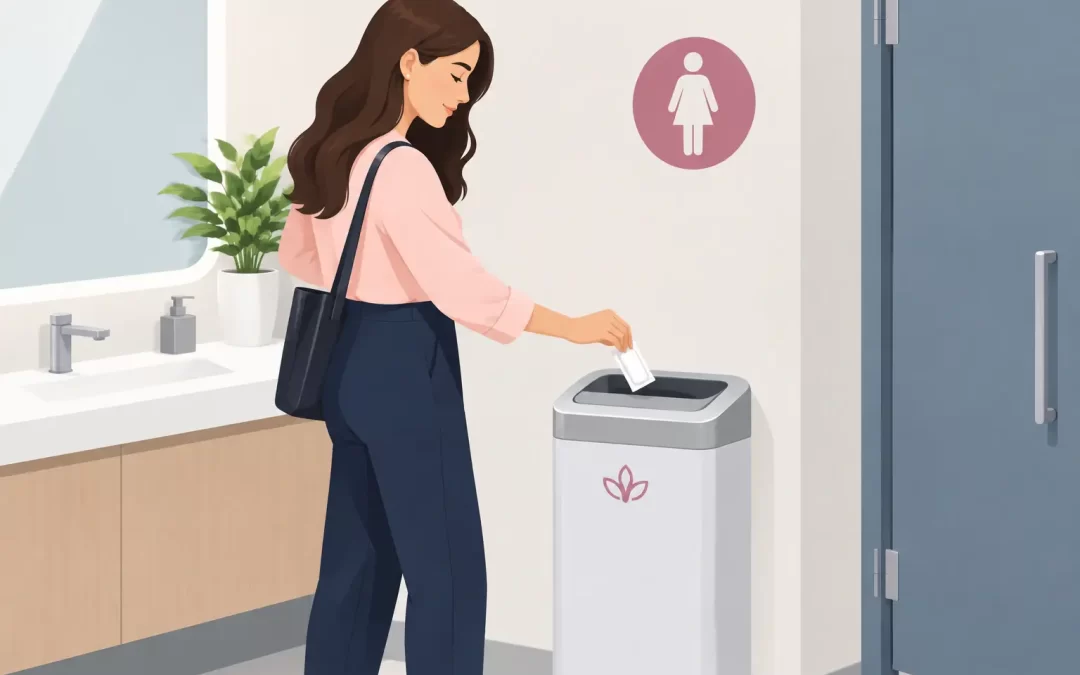
A restroom can look clean at first glance and still create a poor experience when sanitary waste has nowhere appropriate to go. Feminine bins give users a private, hygienic way to dispose of menstrual products while helping facilities teams prevent odors, blocked toilets, litter, and avoidable cleaning callouts.
For offices, retail spaces, schools, hospitality venues, healthcare settings, and managed residential properties, this is a small washroom detail with a direct effect on hygiene standards and user comfort. The right bin, in the right location, with a reliable service routine, makes restroom maintenance easier and more professional.
Why feminine bins matter in commercial restrooms
Sanitary product disposal is a practical requirement, not an optional extra. Pads, tampons, liners, wipes, and related items should never be flushed. They can cause plumbing blockages, damage pipework, create unpleasant backups, and add unnecessary cost to a property’s maintenance budget.
A purpose-designed sanitary waste bin gives people a clear alternative. It also helps cleaning teams maintain a more presentable restroom. When users cannot see a suitable disposal option inside a stall, they may leave products beside the toilet, place them in open general trash cans, or attempt to flush them away.
The best restroom arrangements protect privacy as well as cleanliness. A discreet bin within each toilet stall means users do not need to carry used products across the room. This is particularly valuable in busy shared facilities, where the quality of the washroom often influences how customers, employees, tenants, and visitors judge the wider premises.
Although the term “feminine bins” is widely used in searches and purchasing, many facilities teams also use terms such as sanitary waste bins, hygiene bins, or menstrual product disposal bins. Whatever name is used, the operational purpose is the same: safe, contained disposal with dependable servicing.
What to look for in feminine hygiene bins
A general wastebasket is not always suitable for sanitary waste. It may be open, too small, difficult to clean, or positioned outside the stall. A dedicated unit should be selected for its hygiene features, capacity, and suitability for the restroom environment.
A pedal-operated bin is often a strong choice because it reduces hand contact. Lidded bins can also work well when they are easy to open, stable on the floor, and cleaned regularly. In compact restrooms, slimline units can fit neatly beside the toilet without restricting access or becoming a trip hazard.
Capacity should reflect actual traffic rather than guesswork. A small single-occupancy office restroom may only need a compact bin serviced on a planned schedule. A busy workplace, restaurant, school, venue, or public-facing location may need larger capacity and more frequent collection. An undersized bin can overflow quickly, while an unnecessarily large unit may take up valuable space and make service intervals harder to manage.
The liner and disposal method matter too. A bin may look suitable, but a poorly fitted liner or an awkward emptying process can expose staff to waste and slow down cleaning. Choose a solution that allows safe removal, contains waste securely, and supports the cleaning procedures used at the site.
Placement: privacy and access come first
Each toilet stall should generally have its own sanitary disposal bin. Position it close enough to the toilet for easy use, but leave sufficient room for users to move comfortably. Avoid placing bins where doors can strike them, where they obstruct accessible fixtures, or where they are likely to be knocked over during cleaning.
Restrooms designed for accessibility need particular attention. The bin should be reachable without interfering with grab bars, transfer space, or door clearance. This is one area where copying the layout from another restroom can cause problems. The best position depends on the size and configuration of the stall.
All-gender restrooms and men’s restrooms should also be considered where appropriate. Not everyone who menstruates uses a women’s restroom, and providing sanitary waste disposal across relevant facilities is a practical way to support users and reduce incorrect disposal.
Clear, respectful signage can help, especially in high-traffic locations. A simple message asking users not to flush sanitary products or wipes can reduce blockages. Keep the wording direct and discreet. Overly prominent signs can make a restroom feel neglected rather than well managed.
Servicing feminine bins at the right frequency
A bin is only effective when it is emptied and cleaned before it becomes a problem. Servicing frequency depends on foot traffic, restroom usage patterns, the number of stalls, bin capacity, and whether free menstrual products are available on site.
For a low-traffic office, scheduled cleaning may be sufficient if staff check the units routinely. In busy commercial properties, a daily or more frequent check may be needed. High-use public restrooms often benefit from recorded cleaning rounds so facilities managers can verify that washrooms are being inspected throughout the day.
During service, staff should remove and replace liners safely, clean the bin’s exterior and touchpoints, check for damage, and confirm that the lid or pedal operates properly. Any leaks, broken hinges, persistent odors, or staining should be dealt with promptly rather than covered up with fragrance.
Odor control is a useful feature, but it is not a substitute for regular collection. Fragranced products may improve the immediate impression of a restroom, yet missed service intervals will still lead to hygiene concerns. Consistent cleaning, properly fitted liners, and timely waste removal deliver better results than perfume alone.
Supporting staff with clear procedures
Sanitary waste handling should be included in the site’s cleaning plan. Staff need access to suitable gloves, liners, cleaning products, and waste bags, along with clear instructions for handling waste hygienically. This is especially relevant where in-house teams cover multiple restrooms or where cleaning duties are completed outside normal business hours.
Facilities managers should also make sure cleaning staff know who to contact if they identify recurring issues. Repeated overflowing bins may indicate that the service schedule needs to change. Frequent blockages could point to poor bin placement, inadequate signage, insufficient capacity, or a wider plumbing problem.
A simple restroom checklist can help maintain consistency. It should cover bin condition, liner replacement, toilet paper, soap, hand-drying supplies, visible cleanliness, odor, and any maintenance concerns. The aim is not paperwork for its own sake. It is to spot small issues before they become complaints, disruptions, or expensive repairs.
Choosing between purchased bins and managed service
Buying feminine bins gives a site direct control over the equipment and works well when an in-house cleaning team already manages waste collection. It can be a cost-effective arrangement for smaller properties with stable occupancy and straightforward restroom layouts.
A managed sanitary waste service may be more suitable for multi-site businesses, high-traffic facilities, or properties that want a clear collection schedule and reduced burden on internal teams. The right choice depends on who is responsible for cleaning, how waste is handled, and the level of oversight required.
When comparing options, look beyond the initial bin price. Consider liner availability, cleaning time, replacement parts, collection needs, storage space, and the cost of plumbing callouts caused by improperly disposed products. A low-cost bin can become poor value if it is difficult to service or does not meet the needs of the restroom.
Aaroma supports businesses and property managers with practical hygiene supplies and professional cleaning expertise, helping sites maintain restrooms that are clean, properly stocked, and ready for daily use.
Well-managed sanitary disposal is a straightforward way to show users that their comfort matters. Put the right bin in every relevant stall, service it reliably, and make clean restroom standards part of the everyday operation.