
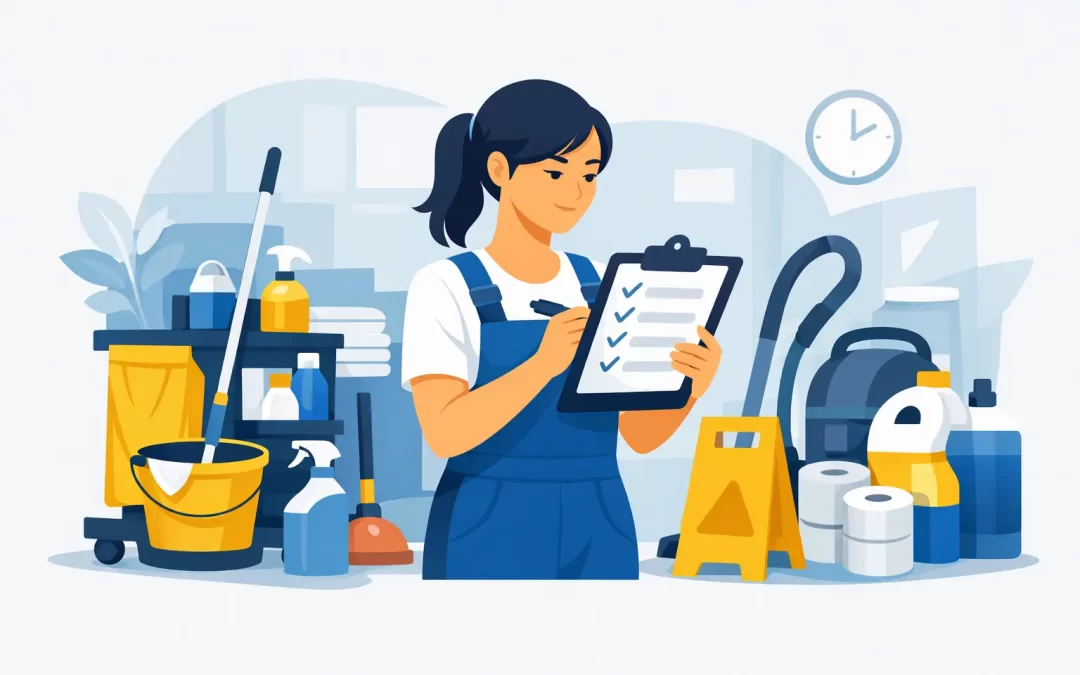
A restroom can look clean at 8:00 a.m. and become a complaint by 10:00 if soap, paper, liners, or disinfectant are missing. That is why the best janitorial supplies checklist is not simply a shopping list. It is a working system for protecting hygiene standards, keeping teams productive, and avoiding rushed purchases at the worst possible time.
For facilities managers, property teams, and business owners, the right supplies depend on foot traffic, surfaces, cleaning schedules, and the equipment already in use. A small office, busy school, healthcare setting, restaurant kitchen, and multi-tenant building should not all stock the same quantities or chemical products. The goal is dependable coverage without a storeroom full of slow-moving stock.
Build Your Best Janitorial Supplies Checklist by Area
Start with the spaces your team cleans, rather than choosing products one category at a time. This makes it easier to assign ownership, estimate usage, and spot gaps before they affect staff, visitors, or tenants.
Restrooms and washrooms
Restrooms require the most consistent replenishment and the clearest separation between cleaning tools. Stock toilet tissue, hand towels or hand dryers supported by the right consumables, hand soap, hand sanitizer where required, and compatible dispensers. Keep spare dispenser parts on hand if your building uses proprietary units.
For cleaning, include restroom cleaner, toilet bowl cleaner, disinfectant, glass cleaner, microfiber cloths, toilet brushes, bowl swabs, gloves, and color-coded mop heads. Sanitary waste bags, trash liners, and odor-control products should match the size and type of each waste receptacle.
Do not assume one disinfectant is suitable for every task. Check the label for contact time, approved surfaces, dilution instructions, and whether a pre-clean is needed. A product that is effective only when left wet for several minutes may not suit a fast-turnover restroom unless staff have time and training to use it correctly.
Offices, reception areas, and shared workspaces
High-touch points drive the supply plan in office environments. Door handles, elevator buttons, light switches, shared keyboards, phones, tables, and breakroom surfaces all need suitable cleaners and dedicated cloths.
Keep all-purpose cleaner, disinfectant wipes or a spray-and-wipe system, glass cleaner, microfiber cloths, dusters, vacuum bags or filters, and appropriate trash liners in regular stock. For hard floors, add neutral floor cleaner, mop heads, buckets, warning signs, and floor pads matched to the machine and finish.
Keyboard cleaning deserves particular attention in shared offices. Use products designed for electronics, such as compressed air and screen-safe wipes, rather than overspraying liquid disinfectant onto equipment. It takes only one damaged keyboard or monitor to erase any saving made by using the wrong product.
Breakrooms, kitchens, and food-service areas
Kitchen cleaning supplies need to handle grease, food residue, and frequent contact surfaces without creating a chemical safety issue. Use degreasers suited to the soil level, food-safe sanitizers where applicable, dishwashing products, hand soap, paper towels, scrubbing pads, and separate cloths and brushes for food areas.
A commercial kitchen may also require oven and grill cleaner, drain maintenance products, canopy cleaning solutions, and heavy-duty waste bags. These products should be selected around the equipment, ventilation requirements, and staff training. Stronger is not always better – an overly aggressive chemical can damage stainless steel, flooring, seals, or painted surfaces.
Entrances, corridors, and exterior approach areas
First impressions are often decided before a visitor reaches reception. Entryways need entrance mats, mat cleaning products, wet-floor signs, litter pickers, sweeping equipment, exterior trash bags, and floor-care products that can deal with tracked-in dirt and wet weather.
For exterior maintenance, stock should reflect the work your team is approved and equipped to carry out. Power washing, graffiti removal, gum removal, and specialized exterior chemicals require the correct PPE, surface assessment, and controlled use. These are not products to substitute casually when the usual stock runs out.
Core Supplies Every Cleaning Room Needs
Once each area is covered, build a central supply list for daily operations. The following categories are the practical backbone of most professional cleaning programs:
- General cleaning chemicals, including neutral cleaner, glass cleaner, restroom cleaner, degreaser, disinfectant, and floor cleaner.
- Cleaning tools, including microfiber cloths, mops, buckets, squeegees, scrubbers, dusters, toilet brushes, spray bottles, and vacuum accessories.
- Paper and hygiene consumables, including toilet tissue, hand towels, soap refills, sanitizer, facial tissue, and dispenser components.
- Waste-management supplies, including liners in the correct sizes and gauges, recycling bags, sanitary waste products, labels, and litter-picking tools.
- PPE and safety items, including disposable and reusable gloves, eye protection, masks where risk assessment calls for them, aprons, wet-floor signs, and first-aid supplies.
- Floor-care materials, including pads, brushes, stripping products, finish, carpet spotters, and machine-specific accessories where relevant.
The detail matters. A thin liner may be adequate for office paper waste but fail in a breakroom bin. A microfiber cloth may be ideal for polishing glass but unsuitable for a heavily soiled restroom fixture if it is then moved between zones. Choosing products by use case reduces cross-contamination and unnecessary replacement costs.
Control Chemical Safety and Compatibility
Cleaning chemicals should be managed as operational products, not general supplies. Keep original labels intact, store products away from food and heat sources, and make safety data information accessible to the team. If concentrates are used, provide correctly marked dilution bottles and train staff on the ratio required for each task.
Never mix chemicals unless the manufacturer specifically permits it. Bleach and acidic products, for example, can create dangerous fumes. The same caution applies to surface compatibility. Stone, wood, aluminum, specialty flooring, touchscreens, and coated glass may all require a different cleaning method.
Color coding is one of the simplest controls available. Assigning separate cloths, mop heads, and buckets to restrooms, food areas, general spaces, and low-risk surfaces helps teams work faster while maintaining a more hygienic process. The colors themselves can vary, but the system must be clear and consistently followed.
Set Par Levels Instead of Ordering When Stock Runs Out
A checklist works best when it includes minimum stock levels, often called par levels. For each essential item, identify normal weekly usage, delivery lead time, storage capacity, and a reasonable buffer for busy periods. Then set a reorder point before the supply reaches zero.
For example, if a building uses two cases of hand towels per week and deliveries take five business days, holding only one case in reserve creates avoidable risk. On the other hand, buying six months of a product with limited shelf life or changing dispenser compatibility can tie up money and create waste.
Review usage after seasonal changes, building occupancy shifts, events, or changes to cleaning frequency. Winter weather can increase demand for entrance mat care and floor cleaner. Flu season may increase sanitizer, disinfectant, gloves, and paper towel consumption. A good procurement plan adjusts to actual conditions rather than relying on last year’s order quantities.
Make the Checklist Easy for Teams to Use
The most detailed inventory sheet will fail if it stays in a manager’s inbox. Keep a practical version in the janitorial closet or digital stock system, with product names, approved alternatives, unit sizes, storage locations, reorder points, and the person responsible for ordering.
Standardizing products across a portfolio can simplify training and purchasing, but there are trade-offs. One preferred paper towel or soap system can reduce costs and prevent dispenser mismatches. Yet a site with unusually high traffic may need a higher-capacity solution. Standardize where it improves control, then allow justified exceptions where site conditions demand them.
Aaroma supports facilities with both professional cleaning experience and a broad range of janitorial, hygiene, PPE, floor-care, and waste-management supplies. That combination is useful because supplies should support the cleaning method, equipment, and standard expected on site, not sit separately from them.
A Final Check Before You Place an Order
Before approving an order, walk the facility with the checklist in hand. Open dispensers, check chemical labels, inspect mop heads and vacuum filters, look at liner fit, and ask cleaning staff what runs out first. Their answers often reveal the real issue: an item may be technically stocked but stored too far away, incompatible with existing equipment, or impractical for the task.
The right supply room gives a cleaning team confidence. When essential products are safe, compatible, available, and easy to find, the standard of the building becomes easier to protect every day.