
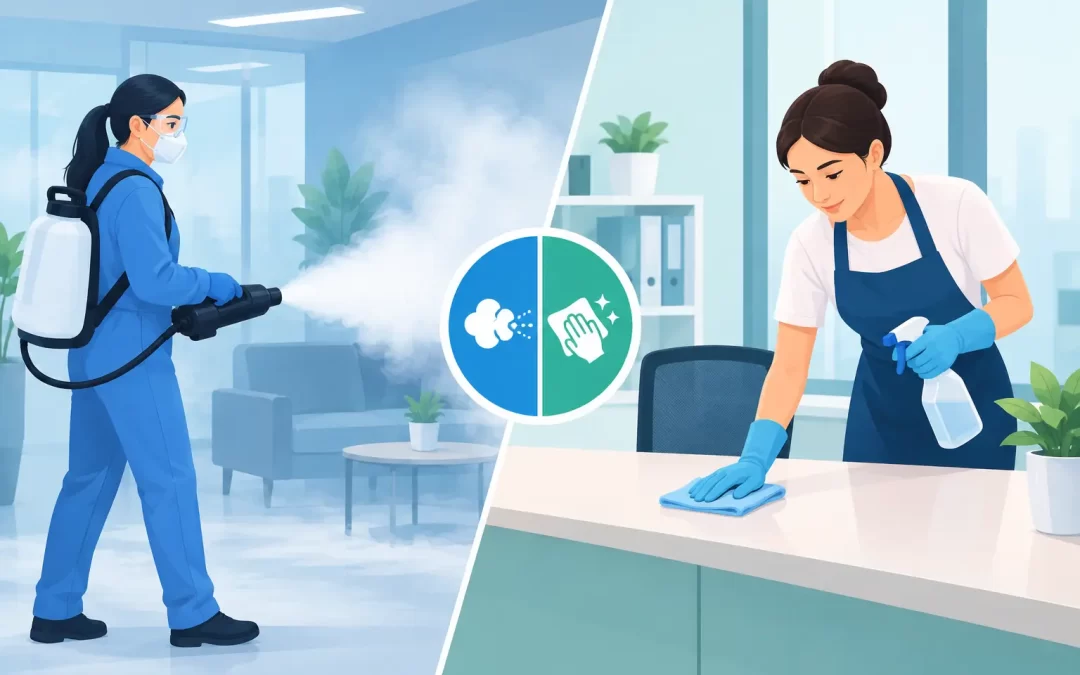
A meeting room can look spotless at 8:00 a.m. and still carry the residue of a busy day on touchpoints, shared equipment, and hard-to-reach surfaces. That is why the choice between disinfectant fogging vs manual cleaning matters. These methods serve different purposes, and the best results usually come from using each one at the right stage of a cleaning plan.
For facilities managers, property managers, and business owners, the goal is not simply to make an area smell clean. It is to maintain a hygienic environment, protect staff and visitors, meet site standards, and avoid spending money on a service that does not suit the space. Manual cleaning remains the foundation of effective hygiene. Fogging can be a useful additional measure when it is correctly specified, carried out safely, and followed by proper reopening procedures.
Disinfectant Fogging vs Manual Cleaning: The Main Difference
Manual cleaning involves physically removing dirt, dust, spills, grease, and contamination using cloths, mops, brushes, equipment, and appropriate cleaning chemicals. Disinfection is then applied to suitable pre-cleaned surfaces, following the product label instructions and required contact time.
Disinfectant fogging uses specialist equipment to disperse a fine mist of approved disinfectant across a space. Depending on the equipment and product, it may be used to treat broad surface areas more quickly than wiping every individual item. It is often considered after a confirmed illness, during a heightened hygiene concern, or as part of a planned deep-cleaning program for shared premises.
The key distinction is simple: fogging distributes disinfectant, while manual cleaning physically removes soil. A disinfectant cannot reliably work through visible dirt, food residue, grease, or built-up grime. If a surface has not been cleaned first, fogging alone may leave the most significant contamination in place.
Why Manual Cleaning Is Still Essential
Manual cleaning gives a trained cleaner direct control over the surface. They can see spills, remove marks, focus on frequently touched areas, and use the right method for the material being treated. This is especially valuable in offices, kitchens, restrooms, schools, rental properties, and homes, where different surfaces need different levels of care.
High-touch points benefit most from hands-on work. Door handles, elevator buttons, railings, light switches, desk phones, keyboards, faucets, toilet flush plates, and shared appliances are all areas where a cleaner can apply targeted attention. A cloth or wipe also creates the physical action needed to lift dirt from a surface before disinfection takes place.
Manual cleaning is also the better option when a facility needs ongoing day-to-day standards. A weekly fogging treatment will not replace daily restroom cleaning, kitchen cleaning, floor care, waste removal, or the cleaning of desks and communal areas. For regular maintenance, a structured cleaning schedule provides visible quality and dependable hygiene control.
Manual Cleaning Delivers Better Detail
Detailed cleaning is where manual work earns its value. A trained team can identify neglected corners, sticky surfaces, fingerprints on glass, buildup around fixtures, and contamination around waste areas. They can also respond to the actual condition of the property rather than applying one treatment across every surface.
This matters for appearance as much as hygiene. Clients, staff, tenants, and visitors notice clean floors, clear glass, fresh restrooms, and well-maintained shared areas. Fogging may be part of a hygiene response, but it does not remove stains from carpets, dirt from entryways, grease from kitchen surfaces, or scale from restroom fittings.
When Disinfectant Fogging Can Be Useful
Fogging can be a practical supplementary service for large or complex spaces where a broad disinfectant application is required after thorough cleaning. It may be considered for offices, common areas, vacant properties, gyms, care settings, vehicles, educational spaces, and other high-use environments, subject to the disinfectant product, surface compatibility, and site risk assessment.
It is particularly useful where there are many surfaces or areas that are difficult to access by hand. The fine mist can settle across exposed surfaces, helping to support a wider disinfection process. However, the word exposed is doing a lot of work here. Fogging cannot guarantee treatment beneath clutter, inside closed drawers, under heavy equipment, or behind objects that block the spray.
A fogging service also requires preparation. Occupants generally need to leave the treatment area, sensitive equipment may need protection, food and exposed materials must be addressed, and the space should remain closed for the required period. Afterward, the area needs adequate ventilation before people return. These details should be planned, not treated as an afterthought.
Fogging Is Not a Shortcut for Poor Cleaning
The biggest mistake is using fogging as a replacement for cleaning rather than an addition to it. If desks are covered with papers, food debris is present in a break room, or restroom surfaces have visible soil, the property first needs hands-on cleaning.
Think of fogging as a broad final treatment in a properly managed process. It may add reassurance and coverage in the right circumstances, but it cannot compensate for missed cleaning tasks or poor daily hygiene habits. Consistent cleaning, hand hygiene supplies, waste management, and clear staff responsibilities remain central to infection-control planning.
Choosing the Right Method for Your Property
The right decision depends on the condition of the premises, the reason for the service, the number of people using the area, and the level of hygiene risk. A standard office with routine daily use will usually benefit most from regular manual cleaning with focused disinfection of high-touch surfaces. This approach is efficient, visible, and easier to tailor to the building’s working patterns.
A facility responding to an illness concern, reopening after a high-traffic event, or preparing a vacant property for new occupants may need a more intensive program. In these cases, deep manual cleaning followed by disinfectant fogging may be appropriate. The treatment should be based on the space and its use, not on a one-size-fits-all package.
For residential customers, the same principle applies. A home with everyday dust, pet hair, cooking residue, or bathroom buildup needs detailed cleaning first. Fogging may be considered as an additional service in specific situations, but it should not be marketed as a substitute for cleaning bathrooms, kitchens, floors, and frequently touched surfaces.
Safety, Products, and Proper Procedure
Any disinfection service should use products suitable for the intended application and follow the manufacturer’s instructions. That includes dilution, contact time, personal protective equipment, ventilation requirements, and surface restrictions. More chemical is not automatically better, and an incorrectly used product can damage finishes, affect indoor air quality, or create unnecessary risk for occupants.
Electronic equipment needs particular care. Keyboards, monitors, phones, control panels, and audio-visual equipment should be cleaned using methods appropriate to the manufacturer guidance. A professional cleaning contractor will consider these details before treatment, rather than applying the same approach to every item in the building.
Clear communication also matters. Staff or residents should know when work is being carried out, which areas are unavailable, when they can re-enter, and whether any preparation is required. This keeps disruption low and helps ensure the service delivers practical value.
A Better Hygiene Plan Uses Both Where Needed
For many premises, the strongest approach is layered: regular manual cleaning for visible cleanliness and high-touch disinfection, supported by periodic deep cleaning and fogging only where it provides a real benefit. This gives facilities teams control over costs while maintaining high standards across routine operations.
Aaroma approaches disinfectant services with the same practical focus used across contract cleaning and specialist maintenance. The right service should fit the property, the schedule, and the standard expected by the people who use it.
Before booking a fogging treatment, walk through the space and ask a straightforward question: what needs to be removed, and what needs to be disinfected? That answer will usually point to the right balance of hands-on cleaning, targeted disinfection, and additional fogging support.