
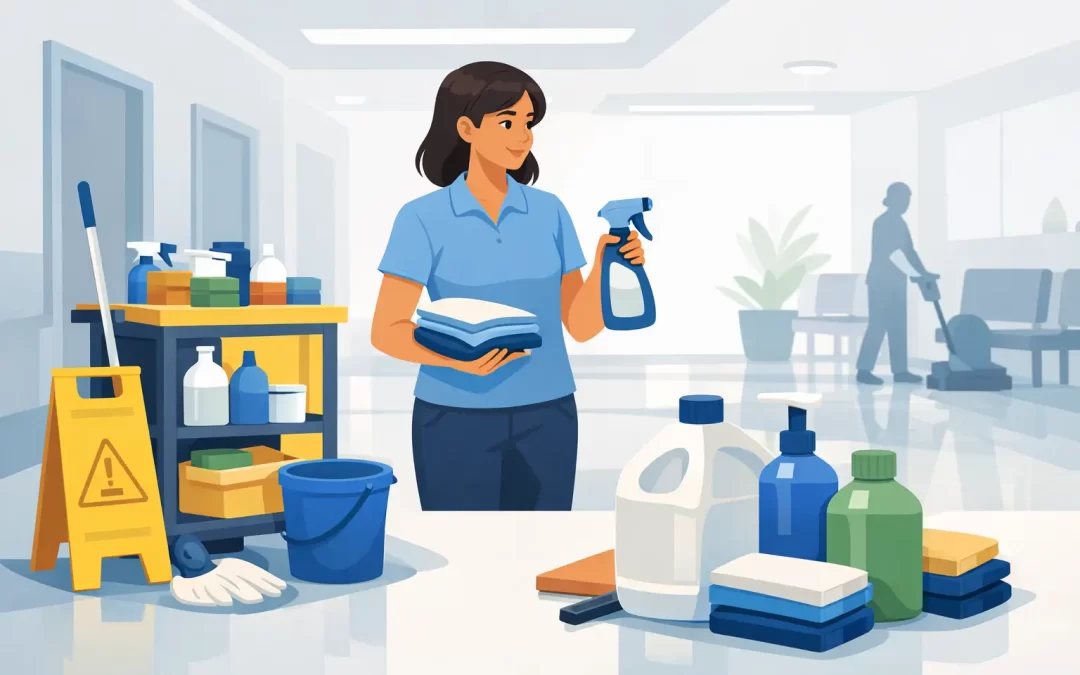
A restroom that runs out of soap at midday, a lobby floor left streaked after mopping, or cleaners searching for the right chemical during a spill all point to the same operational issue: the wrong commercial cleaning supplies, or no reliable system for managing them. For facilities managers and business owners, supplies are not a background purchase. They directly affect hygiene, safety, staff productivity, customer confidence, and the condition of the building.
The lowest unit price is not always the best value. A concentrated cleaner may cost more per bottle but cover far more square footage. A dependable dispenser can reduce waste and prevent empty washrooms. The right product range, stored correctly and replenished on schedule, helps cleaning teams deliver a consistent standard without unnecessary delays.
Start With the Areas That Set Your Hygiene Standard
Every premises has different risks and traffic patterns. An office with a busy reception, shared kitchen, and washrooms needs a different supply plan than a warehouse, healthcare setting, restaurant, school, or managed residential property. Buying products one by one without considering where and how they will be used often creates duplication, excess stock, and gaps when a critical item runs out.
Start by identifying high-touch and high-traffic areas. Door handles, elevator buttons, desks, shared keyboards, washroom fittings, breakroom surfaces, and entrance floors all need suitable cleaning methods. Then consider the surface itself. A harsh degreaser that works well in a commercial kitchen may be unsuitable for finished flooring, painted surfaces, or sensitive equipment.
A practical supply plan generally includes five connected categories:
- Daily cleaning chemicals for surfaces, washrooms, glass, kitchens, and general maintenance.
- Hygiene consumables such as hand soap, sanitizers, toilet tissue, paper towels, wipes, and dispensers.
- Floor care products, including neutral cleaners, degreasers, polish, pads, mops, buckets, and warning signs.
- PPE and safety items such as gloves, aprons, eye protection, spill kits, and appropriate chemical labeling.
- Waste management products, including liners, bins, recycling bags, and odor-control solutions.
These categories should work together. For example, purchasing a quality floor cleaner without compatible mops, pads, dosing equipment, and wet-floor signs can compromise both results and safety.
Choosing Commercial Cleaning Supplies by Task
The best choice depends on the job, the material being cleaned, the level of soiling, and the people using the area. There is no single chemical or cloth that is right for every surface.
Washrooms Need Reliability, Not Just Fragrance
A clean washroom is one of the clearest signs that a property is properly managed. Keep a dependable supply of toilet tissue, hand towels or hand dryers, soap refills, sanitizer, sanitary disposal products, and suitable cleaners for toilets, sinks, mirrors, floors, and touchpoints.
Fragrance can improve the user experience, but it should never mask poor cleaning. Products should remove soil, control odor at its source, and be safe for regular use on the relevant surfaces. Dispenser compatibility matters as well. A low-cost refill is no saving if it leaks, jams, or does not fit the installed unit.
Kitchens and Food Areas Require Product Discipline
Commercial kitchens, staff breakrooms, and catering areas face grease, food residue, and cross-contamination risks. Degreasers, dishwashing chemicals, food-safe surface cleaners, hand hygiene products, and color-coded cloths should be selected for the task and used according to the manufacturer’s instructions.
Stronger is not automatically better. Overuse of chemicals can leave residue, damage surfaces, create strong odors, and increase costs. Correct dilution is often where facilities lose money. Ready-to-use products are convenient for small or occasional jobs, while concentrates and controlled dosing can offer better value in busy locations with trained cleaning staff.
Floors Need a System, Not a Quick Fix
Floors take the most visible daily wear. Entryways collect grit and moisture, washroom floors need regular sanitizing, and hard floors in corridors or retail spaces can quickly lose their finish if cleaned with unsuitable products. The cleaner, equipment, and maintenance schedule must match the floor type.
Neutral cleaner may be appropriate for routine care of many finished hard floors, while greasy back-of-house areas may require a heavier-duty degreaser. Carpet care also needs its own approach, with spot treatments, extraction products, and regular vacuum consumables chosen to protect fibers rather than leave sticky residue that attracts fresh dirt.
Do not overlook safety supplies. Wet-floor signs, absorbent materials, and suitable footwear guidance are part of effective floor care, particularly in entrances and areas open to the public.
High-Touch Cleaning Requires Clear Procedures
Shared workspaces have made touchpoint cleaning more visible, but effectiveness still depends on method. Disinfectants need the correct contact time to work as intended. Spraying a surface and wiping it dry immediately may not achieve the desired result. Cleaning should normally remove visible dirt first, followed by disinfection where required by the site’s hygiene plan.
Microfiber cloths are useful because they can lift and hold soil effectively, but they must be laundered, color-coded, and replaced when worn. Reusing the same cloth from a washroom in a desk area defeats the purpose of a hygiene process. Staff training, labels, and simple cleaning schedules are often as valuable as the products themselves.
Control Cost Through Usage, Storage, and Reordering
Supply spend can rise quietly when products are overused, lost, expired, or stored in several unsecured locations. A central stock area, basic inventory checks, and agreed reorder levels make a significant difference. The goal is not to hold excessive inventory. It is to have enough of the right products to avoid disruption.
Track the items that move fastest: hand towels, toilet tissue, gloves, trash liners, soap refills, and everyday cleaning chemicals. Their usage can reveal changes in building occupancy, cleaning frequency, or waste. If consumption rises sharply, investigate the cause before simply ordering more.
Safe storage is equally important. Chemicals should remain in clearly labeled original containers and be separated where required by their safety information. Keep safety data sheets accessible to staff, maintain ventilation in storage areas, and prevent unauthorized access. Decanting products into unmarked spray bottles creates avoidable risk and makes correct use harder for everyone.
Balance Environmental Goals With Cleaning Performance
Many organizations want to reduce plastic use, packaging waste, and chemical impact. This is a worthwhile objective, but product decisions should still reflect the cleaning task. A product marketed as environmentally preferable must be capable of delivering the required hygiene and appearance standard in the conditions where it will be used.
Concentrated chemicals can reduce packaging and transport volume when they are accurately diluted. Refillable dispensers can cut down on single-use packaging. Durable tools, washable microfiber systems, and measured dosing can reduce waste over time. However, these options only work if staff have the right equipment and training. A concentrated product mixed incorrectly can waste more product than a ready-to-use alternative.
Review environmental claims alongside instructions, safety information, compatibility, and total cost per use. For a high-risk food area or a site with strict infection-control requirements, performance and compliance may take priority over other purchasing factors. In lower-risk routine cleaning, reusable and lower-waste options may be an excellent fit.
Why One Supply Partner Can Reduce Facility Hassle
Facilities teams often manage cleaners, paper goods, PPE, floor products, waste supplies, and specialist maintenance through separate vendors. That can make ordering, invoicing, stock control, and accountability more complicated than necessary. A knowledgeable supply partner can help standardize products across a site while advising on what is suitable for individual areas.
Aaroma combines professional cleaning experience with cleaning supply support, which helps customers choose products based on real operating conditions rather than catalog descriptions alone. This is particularly useful when a building needs routine consumables alongside specialist work such as carpet care, floor maintenance, kitchen cleaning, or disinfection services.
Consistency matters. When the same approved products, dispensing methods, and procedures are used across a property or portfolio, cleaners can work more efficiently and managers can assess results more easily. It also makes induction simpler for new team members and reduces the chance of incompatible chemicals being used together.
The most effective supply plan is the one your team can follow every day: keep essential items available, choose products that suit the surface and task, and give staff clear instructions for safe use. That steady approach protects the building, supports the people inside it, and prevents small supply problems from becoming visible service failures.