
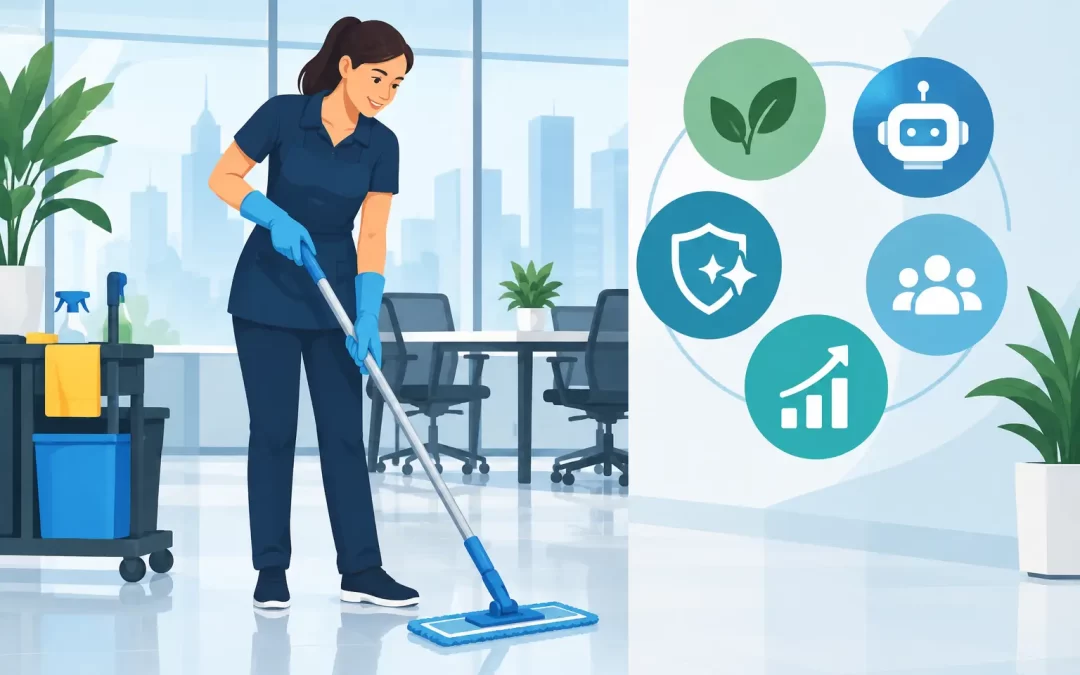
A clean reception area may be the first thing a visitor notices, but facilities teams are judged on far more than appearances. They need workplaces that support employee well-being, meet health and safety expectations, protect expensive surfaces, and remain presentable through a busy working week. The commercial cleaning industry trends shaping purchasing decisions reflect that broader responsibility.
For business owners, property managers, and procurement teams, the question is no longer simply how often a building is cleaned. It is whether the cleaning program delivers visible, consistent results while reducing disruption, managing risk, and providing good value over time.
Commercial Cleaning Industry Trends Moving Beyond Basic Cleaning
Routine office cleaning remains the foundation of most contracts, but customers increasingly expect a provider to understand the whole condition of their premises. High-touch areas, washrooms, kitchens, entrances, carpets, windows, floors, and exterior surfaces all affect how a property performs and how people experience it.
This has increased demand for cleaning partners that can combine recurring work with specialist services. A facility may need daily washroom and office cleaning, periodic carpet extraction, professional floor maintenance, window cleaning, power washing, and kitchen canopy or duct cleaning at different points in the year. Managing those needs through separate contractors can create unnecessary administration, inconsistent standards, and gaps in responsibility.
The practical trend is toward planned maintenance rather than reactive callouts. Regular attention to entranceways, hard floors, upholstery, blinds, and exterior areas helps prevent dirt buildup from becoming permanent staining or avoidable wear. It can also make budgeting more predictable. Not every site requires every specialist service, but every site benefits from a clear schedule based on foot traffic, building use, and the materials being maintained.
Measurable Quality Is Replacing Assumptions
A building can look clean immediately after a service while still falling short in areas that matter most. Missed touchpoints, poorly stocked washrooms, neglected corners, and inconsistent shift coverage are often the issues that lead to complaints. For this reason, quality control is becoming a central part of commercial cleaning contracts.
Facilities managers want evidence that standards are being checked, not simply promised. Site inspections, cleaning checklists, issue logs, supervisor visits, and clear escalation procedures make a meaningful difference. They help identify recurring problems early and give both the customer and contractor a shared view of what good performance looks like.
This does not mean every cleaning contract needs complicated reporting software. A smaller office may be well served by a straightforward communication book and regular manager review. Larger, multi-use buildings may require digital reporting, task verification, consumable tracking, and scheduled service reports. The right level of oversight depends on the size and risk profile of the property.
What matters is accountability. When a concern is raised, the response should be prompt, documented, and followed through. Reliable cleaning is built on people, supervision, and clear standards as much as on equipment or chemicals.
Cleaning Specifications Are Becoming More Site-Specific
Generic task lists often create confusion. A medical setting, shared office, retail property, school, warehouse, and apartment common area each have different pressure points. Even two offices in the same building can require different service levels depending on visitor numbers, food preparation, washroom use, and occupancy patterns.
More customers are asking for cleaning specifications that reflect their actual premises. This includes identifying high-traffic routes, touchpoints, sensitive equipment, restricted areas, and the surfaces most likely to suffer damage if they are treated incorrectly. Keyboard cleaning, for example, requires a different approach from hard-floor maintenance, while natural stone needs different care from vinyl or laminate flooring.
A well-written specification also protects value for money. It makes clear which tasks are included, how often they are completed, and when specialist work should be scheduled separately. That reduces disputes and prevents a low headline price from becoming costly through missed work or poor outcomes.
Hygiene Supply Management Is Part of the Service
Commercial cleaning and hygiene supplies are becoming more closely connected. A washroom cannot meet expectations if dispensers are empty, hand soap is unsuitable, liners are inconsistent, or paper products run out during busy periods. The same applies to PPE, sanitizing products, waste bags, floor care chemicals, and catering hygiene supplies.
For procurement teams, consolidating cleaning services and supply ordering can reduce operational hassle. It simplifies purchasing, supports consistent product selection, and makes it easier to maintain appropriate stock levels. It can also prevent the common problem of cleaners being expected to work around unsuitable or poor-quality products supplied without specialist advice.
The best approach depends on the site. Some organizations prefer fixed monthly supply deliveries, while others need stock replenishment based on actual use. High-occupancy offices and public-facing premises may need more frequent monitoring, particularly for washroom consumables and hand hygiene products.
There is a cost consideration here. Buying the cheapest product is not always the most economical decision if it is used too quickly, performs poorly, or leads to complaints. Product concentration, dispenser compatibility, durability, and correct staff training all influence the real cost per use.
Sustainable Cleaning Is Becoming More Practical
Sustainability is no longer limited to broad promises about using “green” products. Customers are asking more practical questions: Are chemicals used correctly? Can concentrated products reduce packaging and transport? Are waste streams being handled responsibly? Can floor and carpet maintenance extend the usable life of existing materials?
The answer is rarely one product or one policy. A sustainable cleaning program balances environmental considerations with hygiene performance, surface protection, safety data, and the needs of the building. Some environments require stronger disinfectant measures, while others can benefit from lower-impact products for routine cleaning. The key is selecting products for the task rather than applying a single solution everywhere.
Reducing waste also starts with good process control. Accurate dilution, proper storage, refillable dispensing systems, and staff training can prevent unnecessary chemical use. Planned maintenance can reduce the need for aggressive restorative work later, particularly on floors, carpets, and exterior surfaces.
Facility managers should be wary of vague environmental claims that do not explain performance or suitability. A responsible program should still deliver clean, safe, well-maintained premises. Sustainability is most credible when it supports those standards rather than competing with them.
Specialist Cleaning Protects Building Assets
One of the most valuable commercial cleaning industry trends is the growing recognition that specialist cleaning is an asset-protection service. Floors, carpets, upholstery, glazing, façades, and commercial kitchens represent significant investment. Neglect can shorten their useful life, affect safety, and create a poor impression for tenants, customers, and staff.
Hard floors are a good example. Incorrect chemicals, excess water, poorly maintained pads, or unsuitable machinery can dull a finish and create slip risks. A professional floor care plan considers the type of surface, daily traffic, cleaning method, periodic deep cleaning, and protective treatments where appropriate.
Exterior maintenance is equally visible. Graffiti, chewing gum, algae, grime, and weathering can quickly undermine a property’s appearance. Power washing and specialist removal services can restore entrances, walkways, walls, and parking areas, but the method must suit the material. Too much pressure or the wrong treatment can cause damage, so experience matters.
Kitchen canopy and duct cleaning deserves particular attention in food-service environments. It is not merely an appearance issue. Grease buildup can affect hygiene, air quality, equipment performance, and fire risk. Scheduled specialist cleaning, supported by clear records, is a sensible part of responsible facilities management.
Technology Supports Teams, Not Replaces Them
Cleaning technology is improving, from battery-powered equipment and efficient scrubber dryers to digital scheduling and inspection tools. These developments can improve productivity, reduce noise, and provide clearer service records. They are especially useful in large sites where supervisors need visibility across multiple shifts or locations.
However, technology is not a substitute for trained people. A machine cannot decide whether a spill requires a different response, recognize a damaged surface, communicate courteously with a building occupant, or take ownership of a missed detail. The strongest cleaning programs use technology to support skilled operatives and effective supervision.
For customers, the useful question is not whether a contractor uses the newest equipment. It is whether the tools and processes improve reliability, safety, and results at their particular site.
Choosing a Partner for the Next Stage of Facilities Care
The market is moving toward cleaning providers that can take responsibility for standards across routine, specialist, and supply needs. Experience, insurance cover, trained staff, clear quality controls, and responsive customer care remain the fundamentals. New products and reporting methods only add value when those basics are already in place.
For Dublin businesses looking to reduce contractor complexity, Aaroma combines contract cleaning, specialist maintenance, and professional hygiene supply support with more than 25 years of operational experience. The most useful next step is to review your current cleaning specification against the real demands of your premises, then address the gaps before they become complaints, damage, or avoidable expense.