
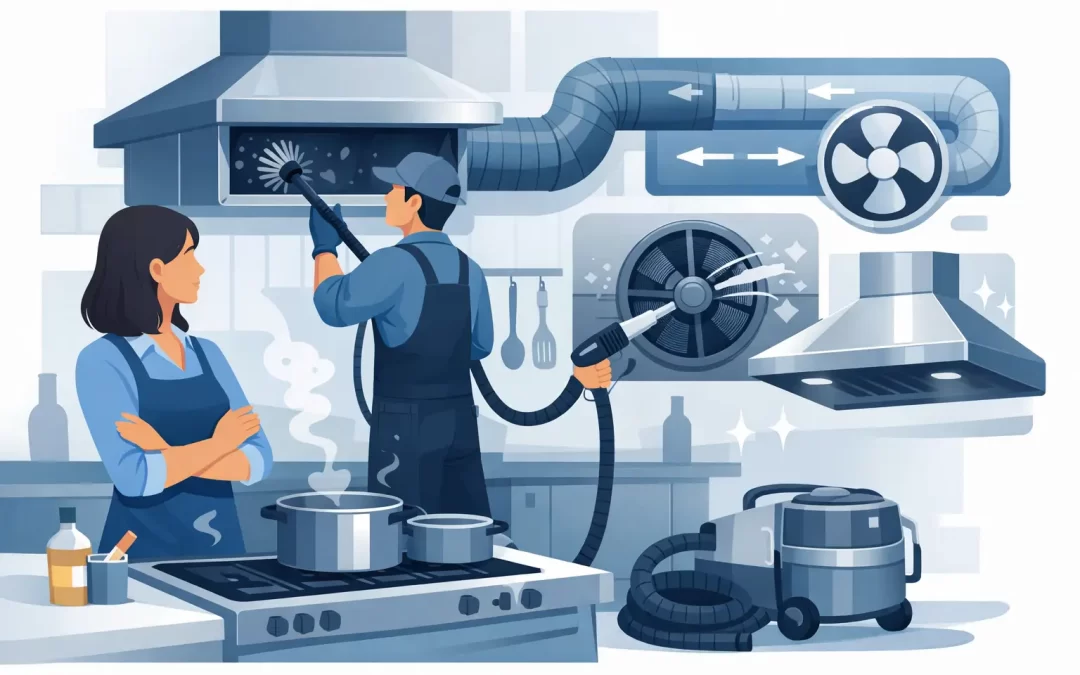
Grease does not stay where you cook it. In a busy kitchen, airborne grease, heat, smoke, and fine particles move quickly through the exhaust path and settle inside ductwork, fans, and filters. That is why air duct cleaning for kitchens is not just about appearance. It is a practical maintenance job that affects fire safety, airflow, hygiene, and how well the whole kitchen operates day to day.
For restaurant owners, facilities managers, landlords, and homeowners, the issue is usually the same. The system works quietly in the background until it starts causing obvious problems. You notice lingering odors, weaker extraction, sticky buildup around vents, or a kitchen that feels hotter than it should. By that stage, the duct system may already be holding a significant layer of grease and debris.
What air duct cleaning for kitchens actually covers
In kitchen settings, air duct cleaning usually refers to cleaning the full extraction path rather than only wiping visible vents. That can include canopy hoods, filters, horizontal and vertical duct runs, access panels, fans, and discharge points. In some properties, it may also include associated ventilation components where grease and cooking residue accumulate.
The exact scope depends on the kitchen type. A commercial kitchen with constant frying, grilling, or high-volume service needs a deeper and more technical approach than a lightly used residential kitchen. A small office breakroom will not generate the same contamination as a hotel kitchen or a fast-casual restaurant. That is why a proper assessment matters before anyone quotes a frequency or a price.
Why kitchen ducts get dirty faster than other systems
Most general HVAC systems collect dust. Kitchen extraction systems collect grease, and that changes everything. Grease is adhesive, which means other particles stick to it easily. Over time, a thin film turns into a stubborn layer inside the system. Once buildup reaches that point, airflow drops and cleaning becomes more involved.
Heat also plays a role. Warm air carries vaporized oils up into the ductwork, where they cool and settle on internal surfaces. If the kitchen runs for long hours, the process repeats continuously. In commercial environments, that buildup can happen much faster than many operators expect.
The biggest reason to clean: fire risk
When people ask whether this service is really necessary, fire risk is usually the clearest answer. Grease is combustible. If enough of it builds up inside an extraction system, a flare-up at cooking level can travel into the canopy or duct line. That turns a local incident into a far more serious one.
Regular cleaning helps reduce the fuel load sitting inside the system. It does not replace good kitchen practices, staff training, or equipment maintenance, but it is a key part of responsible risk control. For commercial premises, that matters not only for safety but also for inspections, insurance expectations, and business continuity.
Airflow, odor control, and kitchen comfort
Not every problem is dramatic. Sometimes the issue is simply that the kitchen no longer feels right. Extraction that used to clear steam and smoke quickly starts lagging. Odors hang around dining areas, hallways, or adjacent rooms. Staff work in hotter, less comfortable conditions, and that can affect both productivity and customer experience.
Clean ducts support better airflow because the system is not fighting against layers of residue. Fans can operate more effectively, filters perform as intended, and the kitchen environment becomes easier to manage. In a home, that may mean less smell drifting through the house. In a business, it can mean a more functional workspace and a better impression for customers and inspectors alike.
Hygiene standards matter too
Kitchen ductwork is out of sight, but it is still part of the hygiene picture. Grease and debris inside extraction systems can contribute to odors, contamination risks, and an overall decline in cleanliness standards. In commercial settings, hidden buildup can undermine the work being done on visible surfaces every day.
This is where specialist cleaning makes a difference. Surface wiping around a hood is not the same as cleaning the internal system. A professional service is designed to reach the areas routine staff cleaning usually cannot access safely or effectively.
How often should kitchen ducts be cleaned?
This depends on usage, cooking methods, and the type of property. A high-volume commercial kitchen may need attention far more often than a private residence. Kitchens that produce large amounts of grease, such as those with heavy frying or charbroiling, generally need more frequent cleaning than kitchens with lighter cooking loads.
There is no useful one-size-fits-all answer. A low-use residential kitchen may only need occasional professional attention if filters are maintained properly and cooking is moderate. A restaurant, care facility, school, or hotel kitchen usually needs a scheduled program based on actual operating hours and grease production. If you wait until there is a visible problem, you are usually waiting too long.
Signs your kitchen duct system needs cleaning
Some warning signs are easy to spot. Grease around hood edges, persistent cooking odors, reduced suction, excess smoke, noisy fans, and heat buildup all suggest the system may not be performing well. In commercial kitchens, visible grease at access points or around discharge areas is another common signal.
Other signs are less obvious. Staff may complain that the kitchen feels stuffy. Cleaning teams may notice surrounding surfaces becoming sticky more quickly than before. Utility costs can also creep upward if ventilation equipment is working harder to move air through partially blocked ducts. None of these signs should be ignored.
What a professional cleaning process should look like
A proper kitchen duct cleaning service begins with inspection and access planning. The contractor needs to understand the duct route, the contamination level, and any limitations in the building. In many systems, not all sections are easily reachable without the correct access points and equipment.
The cleaning itself may involve degreasing, scraping, agitation, vacuum removal, and fan cleaning, depending on the condition of the system. The objective is not to make only the visible areas look clean. It is to remove internal grease deposits throughout the accessible extraction path so the system can operate more safely and efficiently.
For commercial clients, documentation also matters. A dependable contractor should be able to explain what was cleaned, identify any access issues, and highlight maintenance concerns if parts of the system need repair or further attention. That practical reporting is especially useful for facilities managers and multi-site operators who need clear records, not vague assurances.
Why general cleaning is not enough
This is where some property owners get caught out. A kitchen can look spotless on the surface and still have serious buildup inside the ductwork. Daily and weekly cleaning routines are essential, but they do not replace specialist extraction cleaning.
The skills are different, and so is the risk profile. Grease-contaminated duct systems need trained handling, suitable chemicals, safe access methods, and an understanding of compliance expectations in commercial environments. Choosing a specialist provider is not about paying for a premium label. It is about making sure the work is actually done to the right standard.
Commercial kitchens vs. residential kitchens
Residential and commercial customers both benefit from cleaner kitchen ducts, but their priorities are slightly different. Homeowners are often focused on odors, indoor comfort, and keeping the kitchen clean and safe. They may only need occasional specialist support, especially after years of heavy cooking or renovation dust entering the system.
Commercial clients usually have broader concerns. They need reliable extraction, reduced fire risk, support for hygiene standards, and minimal operational disruption. They also need contractors who show up when agreed, work safely, and understand that kitchen downtime costs money. That is why experienced providers with specialist kitchen cleaning capability, such as Aaroma, are often the safer choice for businesses that need consistent results rather than one-off surface cleaning.
Choosing the right provider
Price matters, but it should not be the only factor. With kitchen duct cleaning, poor workmanship can leave hidden grease behind and create a false sense of security. A reliable contractor should have experience with the type of property you manage, carry proper insurance, work to professional standards, and communicate clearly about scope and findings.
It is also worth looking at the bigger picture. If a provider understands broader cleaning and maintenance needs, that can make ongoing site management easier. For many facilities teams and business owners, working with one accountable contractor for specialist cleaning services reduces hassle and helps maintain more consistent standards across the property.
A clean kitchen extraction system rarely gets much attention when it is working properly, and that is exactly the point. Good air duct cleaning for kitchens is preventative, practical, and far less costly than dealing with avoidable fire risk, poor airflow, or hygiene problems after they escalate. If your kitchen is producing heat, grease, and long operating hours, the smartest time to act is before the system starts showing you it has been neglected.