
A full trash bag is not necessarily a simple waste problem. In an office, retail unit, apartment building, or shared facility, one misplaced battery, food-soiled container, or leaking chemical bottle can create extra handling, higher disposal costs, and avoidable safety risks. This waste segregation guide sets out a practical system for separating waste at the point it is created, keeping work areas cleaner, and making collection more efficient.
Why waste segregation matters in working facilities
Waste segregation means separating materials into the right waste streams before they enter a central trash container or loading area. The objective is not to create more work for staff. It is to prevent recyclable, reusable, compostable, and hazardous materials from being mixed with general waste.
For facilities managers, the benefits are operational as much as environmental. Correct segregation reduces contamination in recycling bins, limits unpleasant odors around waste areas, and can reduce the volume of costly general waste collections. It also helps protect cleaners, maintenance teams, and waste contractors from sharps, broken glass, chemical residues, and other unsafe items.
The right approach depends on your local waste provider, building layout, and the type of work taking place on site. A small office may need a straightforward three-stream setup. A kitchen, healthcare setting, workshop, school, or multi-tenant property will usually need more detailed controls.
Start with the waste your site actually produces
Before ordering bins or putting up signs, walk through the property at normal operating times. Look at desk areas, break rooms, restrooms, receiving areas, kitchens, printing stations, exterior spaces, and janitorial closets. The waste produced in each area should determine the bins placed there.
A reception area may mainly generate paper, beverage containers, and general trash. A staff kitchen will produce food scraps, cardboard, packaging film, bottles, cans, and disposable service items. A maintenance room may have lamps, batteries, aerosol cans, used chemicals, or electrical equipment that must never be placed in regular trash.
This short review often reveals the main problem: bins are placed for convenience, not for the materials being discarded. If staff must walk across a floor to find recycling, general waste will become the default. Put the right container where the decision is being made.
Keep the system simple enough to use
Most commercial facilities benefit from clearly separated streams for general waste, mixed recycling, cardboard, and food or organic waste where a collection service is available. Additional streams may be required for glass, confidential paper, sanitary waste, e-waste, batteries, toner cartridges, lamps, and hazardous materials.
Avoid introducing more streams than the site can manage. A confusing system with six poorly labeled containers will produce more contamination than a clear system with three well-managed containers. Begin with the highest-volume materials, then add specialist containers where there is a clear need and a suitable disposal route.
Use consistent bins, labels, and locations
People sort waste correctly when the choice is obvious. Bin colors can help, but colors are not universal and should never be the only instruction. Follow the color system used by your local waste contractor, then reinforce it with large, durable labels that use both words and images.
Each label should state what belongs in the bin and what does not. For example, a mixed recycling label might show clean paper, cardboard, cans, and accepted plastic containers, while also stating that food, liquids, plastic bags, and heavily soiled packaging do not belong there. Visual examples are especially useful in shared workplaces where visitors, contractors, and staff may not know the building’s procedures.
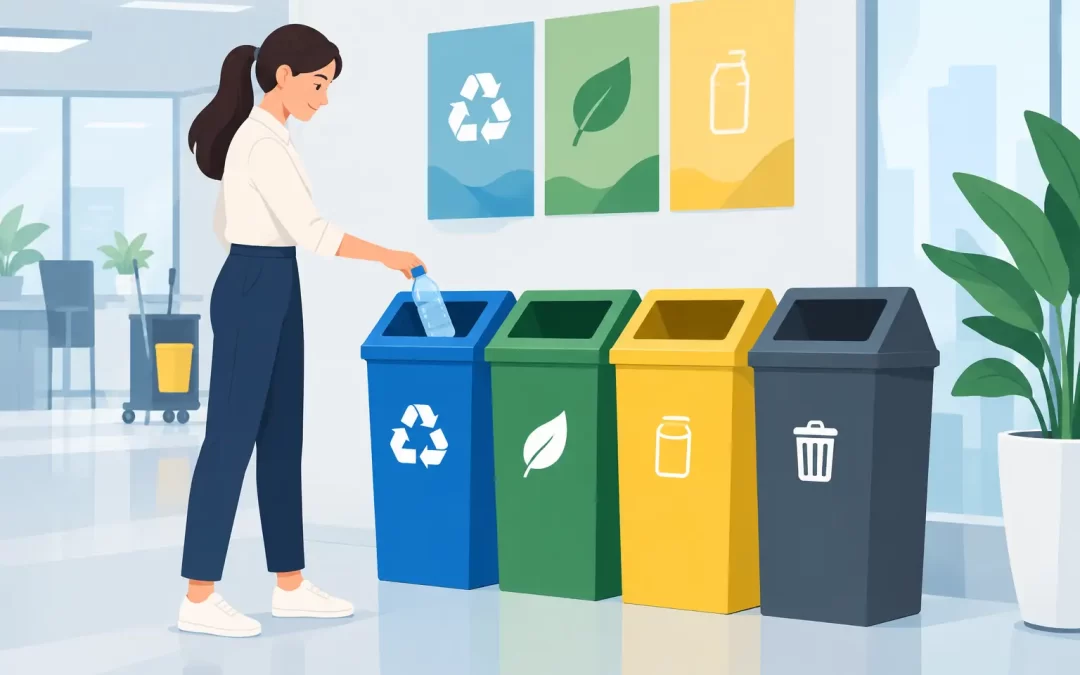
Place paired or grouped bins together. A recycling bin on its own, with a general waste bin several feet away, encourages mistakes. In high-traffic areas, use matching containers with consistent signage at the same height. In kitchens, position organics, recycling, and general waste close to food preparation and dining areas, without obstructing cleaning access or emergency routes.
Prevent contamination before it reaches the dumpster
Contamination happens when the wrong item enters a waste stream. Even a small amount can make an entire recycling load harder to process or cause a waste provider to reject it. The most effective solution is to prevent the error at the source.
Staff should know a few basic rules: empty liquids before recycling containers, keep food and greasy residues out of dry recycling, flatten cardboard, and place bagged general waste only in the correct container. A container that looks recyclable is not always accepted. Coffee cups, flexible films, black plastic, disposable cutlery, and takeout packaging vary by local program and should be checked against your provider’s accepted-material list.
Cleaning teams are an important part of the process, but they should not be expected to sort through mixed waste by hand. Their role is to maintain clean bins, replace liners correctly, report repeated contamination, and transfer separated materials to the appropriate collection point. Clear procedures protect staff while keeping accountability with the people using the bins.
Treat hazardous and specialist waste separately
Some materials require a dedicated route regardless of how small the quantity may seem. Batteries, electrical items, fluorescent lamps, chemicals, paint, aerosols, printer cartridges, sharps, and confidential documents should be stored and collected separately from normal facility waste.
Provide secure, clearly marked containers for these items and keep them away from public areas. Chemical containers should remain labeled, closed, and stored in line with their safety instructions. Never pour leftover chemicals into drains or place unknown substances in regular trash. If your site uses cleaning chemicals, maintenance products, or industrial supplies, maintain an up-to-date inventory and make disposal instructions available to relevant staff.
For confidential paper, locked consoles or secure collection boxes are preferable to open recycling bins. This protects sensitive employee, customer, and business information while supporting responsible recycling after secure destruction.
Build segregation into daily cleaning routines
A waste system succeeds when it is part of normal operations, not a poster that is ignored after the first week. Assign responsibility for bin checks, internal transfers, and collection-area housekeeping. This may involve facility staff, a cleaning contractor, tenant representatives, or a combination of all three.
Daily checks should focus on overflowing bins, damaged liners, leaking waste, odors, and obvious contamination. In food-service areas, organic waste needs frequent removal and washable containers to prevent pests and odors. Exterior dumpster areas also need regular attention. Loose cardboard, open lids, spilled waste, and blocked access can quickly undermine an otherwise well-run property.
Set a simple escalation process. If a particular floor or department repeatedly places food in recycling, do not rely only on cleaners to correct it. Review the bin location, label, and nearby waste options. A short reminder to the relevant team may solve the issue, but repeated problems may call for clearer signs or a different container setup.
Train people at the point of use
Segregation instructions should be included in staff onboarding, contractor briefings, and tenant communications. Keep the message practical. People need to know which bin to use, where specialist materials go, and who to contact when they are unsure.
Brief training is particularly valuable after office moves, renovations, changes in waste contractors, or the introduction of food waste collection. New packaging types and new bin colors can cause confusion even among experienced staff. Refresh instructions periodically and use real examples from the workplace instead of generic rules.
For larger sites, appoint a waste contact for each department or floor. This person does not need to manage all waste, but can report issues early and help reinforce the standard locally. That small level of ownership makes a noticeable difference in multi-tenant buildings and busy operations.
Measure what is working and adjust
Track the basics: the number of general waste collections, recycling contamination reports, overflow incidents, and requests for extra bins. If waste costs are rising, review the material mix before simply increasing collection frequency. General waste may contain recyclable cardboard, bottles, cans, and food waste that are being lost because the system is inconvenient or unclear.
Periodic audits are useful. Open a small sample of bags using appropriate protective equipment and identify the most common misplaced materials. The results should guide practical improvements, such as adding a cardboard station near deliveries, changing kitchen signage, or providing battery collection at reception.
A professional cleaning and facilities partner can help maintain the day-to-day standards that make segregation work, from providing suitable waste-management supplies to keeping bin stations and collection areas clean, safe, and presentable.
A well-run waste area is a visible sign of a well-run facility. Start with a few clear streams, put containers where people need them, and keep refining the setup based on what your building actually throws away.