
Vinyl flooring earns its place in busy homes, offices, retail areas, and managed properties because it handles daily traffic well without demanding complicated care. But knowing how to maintain vinyl floors properly is what keeps that practical surface looking clean rather than scuffed, sticky, or prematurely worn. The routine is straightforward: remove grit often, use the right amount of cleaner, and deal with spills before they become stains.
For facilities managers and property owners, regular floor care also protects the original investment. Replacing damaged vinyl disrupts operations and costs more than a consistent maintenance plan. The right cleaning approach helps preserve appearance, reduce slip risks, and extend the useful life of the floor.
Start With the Type of Vinyl Floor You Have
Vinyl is not one single product. Sheet vinyl, vinyl composition tile, luxury vinyl tile (LVT), and luxury vinyl plank (LVP) can have different wear layers, installation methods, and manufacturer requirements. A cleaner that is suitable for one may not be the best choice for another.
Before introducing a new chemical or machine-cleaning method, check the flooring manufacturer’s care guidance. This matters particularly for newer LVT and LVP floors with factory-applied protective finishes. Harsh alkaline products, solvent-based chemicals, and unsuitable polish can affect the finish or leave residue that attracts more dirt.
The condition of the floor also guides the cleaning method. A lightly soiled office floor needs routine dust removal and damp mopping. An entranceway exposed to rain, grit, and foot traffic may need more frequent attention, effective matting, and occasional professional deep cleaning.
How to Maintain Vinyl Floors Every Day
Grit is the main enemy of vinyl flooring. Sand, small stones, soil, and debris act like abrasive particles under shoes, chair legs, and wheeled equipment. Over time, they create fine scratches that dull the surface and make routine cleaning less effective.
Sweep, vacuum, or dry mop high-traffic areas daily. Use a vacuum designed for hard floors, with the beater bar turned off or removed, so it does not mark the surface. In commercial settings, entrances, corridors, break rooms, and workstations usually need more attention than low-use rooms.
Place quality entrance mats at exterior doors and in transition areas. Mats capture moisture and dirt before they travel across the floor, reducing both cleaning time and wear. They should be cleaned regularly as well. A dirty mat cannot do its job and can become a source of tracked-in soil.
Spills should be wiped up promptly using a clean cloth or mop. Water, coffee, food, grease, ink, and cleaning chemicals can all leave marks if allowed to sit. In kitchens, reception areas, and shared staff spaces, keeping absorbent cloths or suitable spill supplies close by makes quick action easier.
Damp Mop, Do Not Soak
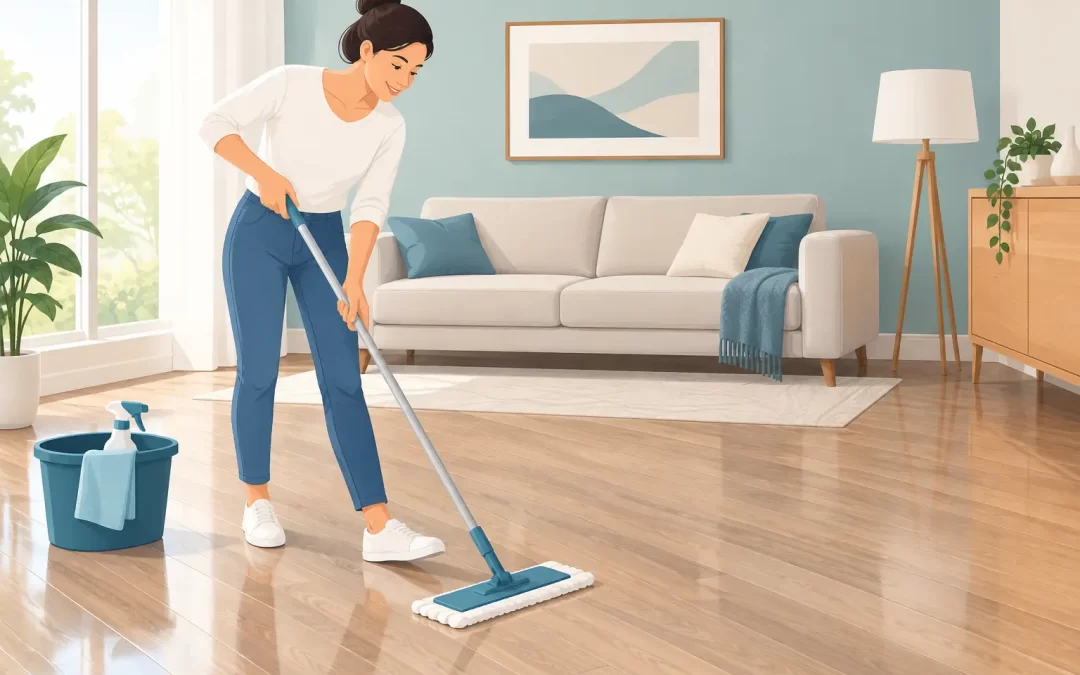
Vinyl floors benefit from regular damp mopping, but excessive water is not helpful. Use a well-wrung microfiber mop and a neutral cleaner made for vinyl or resilient floors. The mop should leave the surface clean and lightly damp, not wet enough for puddles to form.
Standing water can work into seams, edges, or damaged sections of flooring. This is especially relevant with vinyl plank and tile installations, where repeated moisture exposure may contribute to lifting, staining, or problems beneath the floor. It can also create an immediate slip hazard in a workplace or busy household.
Follow the dilution instructions for any floor cleaner. Using extra product does not produce a cleaner floor. It often leaves a film behind, making the surface look hazy or feel tacky. That residue then holds dirt, so the floor becomes dull again soon after cleaning.
For everyday maintenance, clean water and a properly diluted neutral cleaner are usually sufficient. If a floor looks streaky after mopping, review the dilution rate, change the mop water more often, and make sure the mop head is clean. A mop that is carrying old soil simply redistributes it.
Use Clean Tools for Better Results
Microfiber mop pads are a strong choice because they pick up fine dust and use less water than traditional string mops. They must be laundered between uses, however. Reusing a soiled pad can scratch the floor or leave behind grime.
Buckets, mop handles, and cleaning machines should also be maintained. In larger properties, color-coding equipment by area can support better hygiene standards and prevent tools from restrooms being used in food or general office areas.
Prevent Scratches Before They Start
Most vinyl floor damage is preventable. Fit protective pads to the feet of chairs, tables, cabinets, and other movable furniture. Check them periodically because pads collect grit and wear down. Replace them when they no longer provide a smooth protective barrier.
Take care when moving heavy items. Lift furniture whenever possible rather than dragging it. For larger equipment, use protective boards or suitable moving pads to spread the weight and avoid gouges. In commercial premises, wheeled carts should have clean, non-marking casters in good condition.
Avoid rubber-backed mats unless the flooring manufacturer specifically approves them. Some rubber and latex products can react with vinyl over time, causing yellowing or discoloration. The same caution applies to certain dyes in rugs, especially where direct sunlight and heat are involved.
Sunlight is another consideration. Long periods of direct UV exposure can fade or discolor some vinyl floors. Window coverings, UV-filtering film, or rearranging movable rugs and furniture can help keep the color more even, particularly in homes with large windows or storefront settings.
Treat Stains and Marks Carefully
The safest approach is to start with the mildest effective method. Use a neutral floor cleaner and a soft cloth first. For stubborn spots, apply the product to the cloth rather than pouring it directly onto the floor, then test in a hidden area before treating a prominent section.
Scuff marks from shoes can often be lifted with a clean microfiber cloth and an approved resilient-floor cleaner. Do not reach immediately for abrasive pads, steel wool, or harsh powders. These can remove the protective surface, leaving a visibly different patch and making the floor more vulnerable to future staining.
Grease in kitchens or break rooms may require a properly diluted degreaser that is suitable for vinyl. Rinse or wipe the area afterward if the product instructions require it. Heavy grease, paint, adhesive, or chemical staining may call for specialist assessment, especially on commercial floors where an unsuitable product could create a larger repair issue.
Avoid Common Vinyl Floor Care Mistakes
A few well-intended cleaning habits can shorten the life of vinyl flooring. Steam cleaners are a common example. While some manufacturers may approve limited use on specific products, high heat and moisture can affect seams, adhesives, and edges. Unless the flooring guidance clearly permits steam cleaning, it is safer to avoid it.
Do not use wax, polish, or finish simply because a floor has lost some shine. Many modern vinyl floors are designed to be maintained without wax. Applying the wrong coating can create buildup, change slip resistance, and make later cleaning more difficult. Older vinyl composition tile may be different and can benefit from a planned finish-maintenance program, but this should be matched to the floor type and traffic level.
Bleach, ammonia, solvent cleaners, and highly alkaline chemicals should not be routine choices for vinyl floors. They can damage the surface, alter the color, or leave residues. Disinfecting may be necessary in certain settings, but the disinfectant must be compatible with the flooring and used according to its label instructions, including contact time and dilution.
Plan Periodic Deep Cleaning
Even well-maintained vinyl collects embedded soil over time, particularly around entrances, under desks, and in areas with frequent foot traffic. A periodic deep clean removes buildup that routine mopping cannot shift and restores a more even appearance.
The correct frequency depends on use. A quiet guest room may only need occasional deep cleaning, while a reception area, clinic, school corridor, or retail space may need it several times a year. Deep cleaning should use suitable equipment, pads, and chemicals at the right settings. Excessive pressure or an overly aggressive pad can damage the wear layer.
For larger commercial sites, a documented floor maintenance schedule is worthwhile. It provides consistency across cleaning teams, supports budgeting, and makes it easier to spot deterioration before it becomes a replacement project. Include daily dry soil removal, routine damp mopping, spot cleaning, mat maintenance, and planned restorative cleaning.
A vinyl floor does not need complicated treatment to perform well. It needs a clean, controlled routine that matches the traffic it carries. Keep grit off the surface, use compatible products sparingly, and act quickly on spills and scuffs. Those small, regular actions protect the finish and help the floor continue making a good impression every day.