
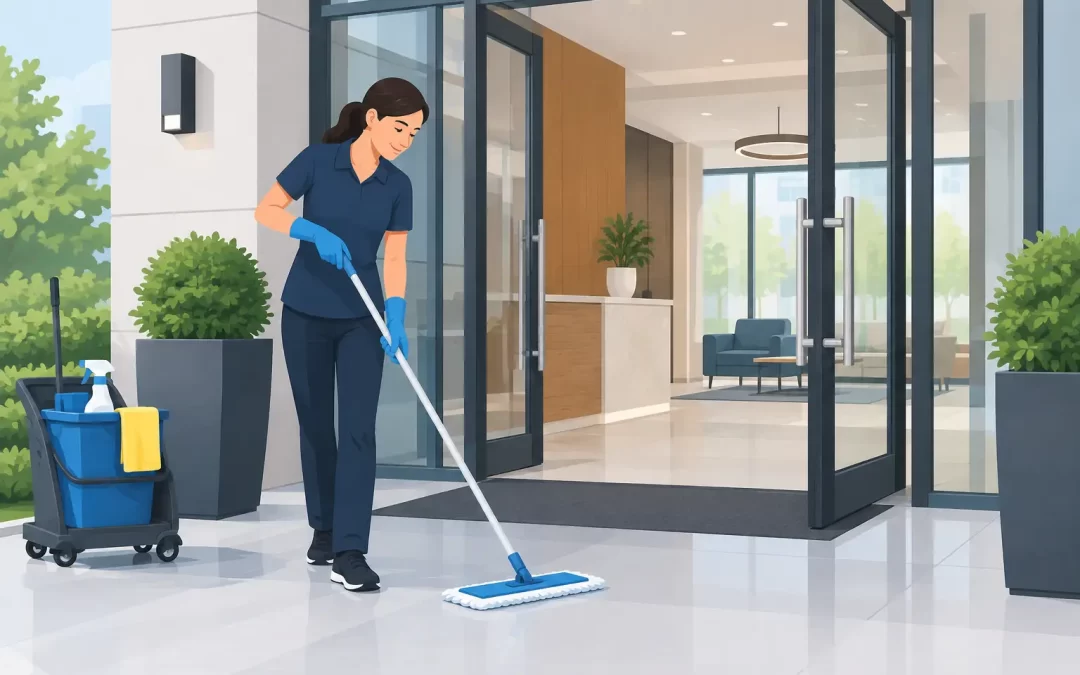
A dirty entryway changes how tenants, visitors, and customers judge a property before they reach reception. This building entrance cleaning guide helps property managers set a practical standard for the areas that take the most daily wear: sidewalks, door glass, entry mats, lobby floors, touchpoints, and exterior fixtures.
A good entrance cleaning plan is not about making every surface look perfect for five minutes. It is about keeping the arrival experience safe, presentable, and consistent through changing weather, heavy foot traffic, deliveries, and public use. The right routine also prevents small problems – tracked-in dirt, gum, salt residue, fingerprints, and wet floors – from becoming expensive maintenance issues.
Start with the full visitor route
An entrance is more than the front door. Review the route as a visitor would, starting at the curb, parking area, or sidewalk and continuing through the first internal space. Look for litter, weeds, stains, uneven surfaces, damaged mats, smudged glazing, overflowing bins, and signs that are difficult to read.
This walk-through should happen at different times of day. A property may look clean at 7 a.m. but have wet floors, marked glass, and a full trash can by lunchtime. For offices, apartments, healthcare settings, retail locations, and mixed-use buildings, traffic patterns should determine the cleaning schedule rather than a fixed one-size-fits-all routine.
Outdoor areas need attention because wind, rain, leaves, grit, and vehicle pollution collect quickly. Indoors, the priority shifts to floors, touchpoints, and appearance-sensitive surfaces. Treat the entrance as one connected zone so dirt is stopped as early as possible rather than carried across the lobby.
Build a daily building entrance cleaning checklist
Daily cleaning should address visible dirt and the safety issues most likely to affect visitors. Sweeping alone is rarely enough. Fine grit can damage floor finishes, while moisture can turn a clean-looking floor into a slip hazard.
At opening, inspect the sidewalk or walkway, steps, ramps, handrails, doors, glass, mats, lobby floor, elevator call buttons, reception counter, and waste bins. Remove litter and debris first, then use the suitable method for each surface. For example, glass needs a streak-free cleaner and clean microfiber cloths, while a stone walkway may require sweeping, spot treatment, or periodic pressure washing rather than excessive chemical use.
High-touch points deserve particular care. Door handles, push plates, access panels, intercoms, handrails, and elevator buttons should be cleaned and disinfected according to the building’s use and risk level. Disinfection is most effective after visible soil has been removed. Applying disinfectant over grime can reduce contact with the surface and leave an untidy finish.
During wet weather, increase floor inspections. Place mats securely, remove saturated mats for replacement or drying, and use wet-floor signs while mopping. Never allow warning signs to become a substitute for prompt cleaning. The safest result comes from controlling water at the door, removing it quickly, and using flooring products suited to the surface.
Use mats as the first line of defense
Entrance matting is one of the most cost-effective parts of an entrance maintenance plan. Quality mats capture water and soil before they reach hard flooring, reducing cleaning time and extending the life of carpet, tile, stone, vinyl, or wood finishes.
The trade-off is that mats only work when they are correctly sized, flat, clean, and positioned where people naturally walk. A small decorative mat may look neat but will not manage traffic from a busy office, apartment complex, or retail entrance. Larger facilities often need a combination of scraper matting outside and absorbent matting inside.
Vacuum or sweep mats daily, especially in high-traffic conditions. Schedule deeper cleaning before soil becomes embedded and the mat loses its ability to trap dirt. Check edges and backing regularly. Curling, loose, or worn mats create trip risks and should be replaced without delay.
Match the method to the surface
Using the wrong product can leave permanent marks, reduce slip resistance, or damage protective coatings. Cleaning teams should know what each entrance surface is made of and follow the relevant maintenance instructions.
Glass doors and sidelights benefit from regular detailing because fingerprints, rain spots, and tape residue are highly visible. Clean both sides where accessible, including frames, tracks, and handles. Avoid leaving excess moisture near door hardware or electrical access controls.
Hard floors require a method appropriate to their finish. Neutral cleaners are commonly suitable for routine mopping, but heavily soiled floors may need specialist treatment. Stone, polished concrete, vinyl, ceramic tile, and timber all respond differently to water, chemicals, abrasive pads, and mechanical equipment. When in doubt, test an inconspicuous area or use a trained floor care provider.
Exterior concrete, pavers, walls, and canopies often need periodic power washing to remove traffic film, algae, moss, chewing gum, and staining. Power washing is effective, but it should be planned carefully. Incorrect pressure can damage joints, lift paint, force water into building fabric, or spread contaminated runoff. Graffiti removal also requires a surface-specific approach, particularly on painted finishes, stone, and glazed materials.
Set frequencies by traffic, weather, and building use
A single weekly schedule does not suit every property. A low-traffic professional office may need a detailed entrance clean each morning with touch-up visits as required. A residential building with families, deliveries, pets, and shared amenities may require several checks throughout the day. Retail, medical, education, and hospitality settings commonly need continual attention during operating hours.
Weather changes the plan. Rainy conditions call for more mat maintenance, floor drying, and exterior debris removal. In regions with snow or de-icing products, salt residue should be removed promptly to protect floors and reduce slippery buildup. Dry, windy periods increase dust and leaf collection, while warmer months can bring gum, spills, and odors around waste areas.
Keep a simple log of inspections, incidents, and work completed. It helps managers identify recurring issues, demonstrate reasonable care, and adjust service levels before complaints develop. A record is particularly useful where several contractors, building staff, or shifts share responsibility for the entrance.
Protect safety without compromising appearance
A clean entrance should never create an unsafe one. Use clear temporary signage during wet cleaning, keep equipment out of travel routes, and store chemicals securely. Staff should follow product dilution instructions, wear suitable personal protective equipment, and understand how to respond to spills.
Lighting also matters. Dirt on light fittings, dark corners, and unclean glass can make a well-maintained entrance feel neglected or unsafe. Include lighting covers, signage, mailboxes, planters, and exterior furniture in periodic detailed cleaning. These details influence the overall impression just as much as the main floor.
For multi-tenant properties, define who is responsible for each section of the entrance. Confusion between tenants, security staff, maintenance teams, and cleaning contractors is a common reason that bins overflow or spills remain unattended. Clear service specifications and response expectations prevent gaps.
Know when specialist support is worthwhile
Routine in-house cleaning can cover daily upkeep, but specialist work is often the better value for difficult exterior surfaces, carpet extraction, floor restoration, high-level glass, graffiti, gum removal, and heavy staining. The cheapest approach is not always the most economical if it shortens the life of a floor or leaves a safety issue unresolved.
When choosing a contractor, look for experience with similar property types, documented safety procedures, appropriate insurance, and a scope that clearly states frequencies, materials, and response times. A provider that can also supply hygiene products, floor care chemicals, waste supplies, and personal protective equipment can reduce the time spent managing multiple vendors.
Aaroma supports properties with routine contract cleaning and specialist maintenance services, helping managers maintain a professional first impression without adding unnecessary operational hassle.
The most effective entrance plan is the one your team can carry out consistently. Walk the route often, act on small defects quickly, and adjust the schedule when traffic or weather changes. Visitors may not comment on a spotless doorway, but they will notice the confidence it gives them when they walk in.