
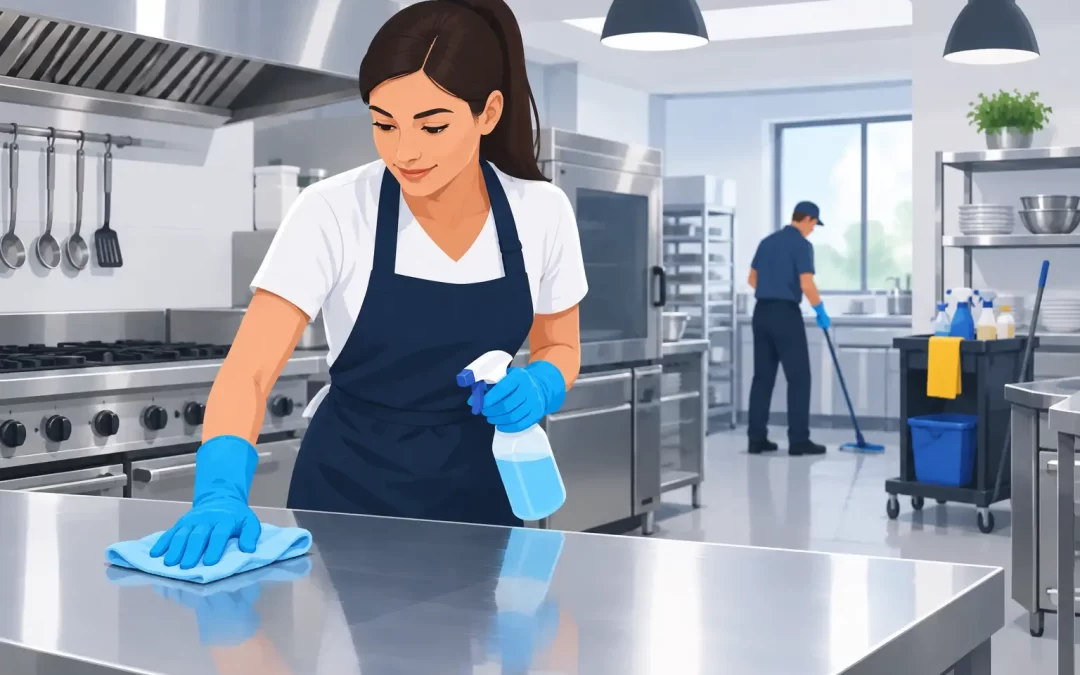
A busy service can hide a cleaning problem until it becomes an equipment failure, an unpleasant odor, a pest issue, or an unwelcome inspection finding. Commercial kitchen cleaning is not simply about making stainless steel look presentable. It is a practical control measure for food safety, staff safety, customer confidence, and the working life of expensive kitchen equipment.
For restaurant owners, caterers, hotels, schools, healthcare facilities, and property managers, the right standard is one that remains consistent during the busiest weeks, not just before an inspection. That takes a clear schedule, suitable products, trained staff, and specialist support for the areas that cannot be safely or effectively handled as part of routine cleaning.
Why Commercial Kitchen Cleaning Needs a Plan
Kitchen soil builds in layers. Grease settles on canopy filters, walls, ducts, and equipment. Carbonized food residue collects on ovens, grills, and fryers. Moisture and food debris can gather beneath appliances, around drains, and inside seals. Each area carries a different risk, so a single end-of-shift wipe-down is never enough.
A planned cleaning program helps teams separate routine tasks from deeper work. It also creates accountability. When staff know what is cleaned daily, weekly, and periodically, important jobs are less likely to be missed during a rushed close-down.
The exact schedule depends on the type and volume of food being prepared. A high-volume fryer station requires more frequent degreasing than a low-use prep kitchen. Likewise, a bakery may need particular attention to flour dust and floor safety, while a seafood kitchen may need stronger odor control and close attention to drains. The principle is the same: clean according to risk, usage, and manufacturer guidance.
Daily Commercial Kitchen Cleaning Tasks
Daily work should focus on food-contact surfaces, high-touch points, immediate spill response, and preventing grease and debris from becoming established. Cleaning and sanitizing are not interchangeable. A surface must first be cleaned to remove visible soil, then sanitized with a correctly diluted product and the required contact time where appropriate.
A reliable closing routine should cover these core areas:
- Wash, rinse, and sanitize food preparation surfaces, utensils, sinks, and equipment parts that are safe to remove.
- Degrease cook lines, splashbacks, handles, controls, and accessible external surfaces of ovens, grills, fryers, and refrigeration units.
- Empty waste, clean bins, and remove food debris from floors, corners, and beneath movable equipment.
- Clean and sanitize frequently touched points such as refrigerator handles, door plates, switches, faucets, and payment or ordering equipment used by kitchen staff.
Floors deserve more attention than a quick mop. Sweep or vacuum up loose debris first, then use the correct degreaser and floor-cleaning method for the surface. Too much water can create a slip risk and may damage some flooring systems. Too little rinsing can leave a residue that attracts dirt or makes floors slippery.
Weekly and Periodic Deep Cleaning
Some of the most important work is not obvious during service. Weekly cleaning should include areas behind and beneath equipment where grease, crumbs, and packaging accumulate. Refrigeration seals, shelving, condenser areas that are accessible and safe to clean, wall tiles, storage racks, and drain surrounds all need scheduled attention.
Deep cleaning also protects equipment performance. Grease-coated oven surfaces and blocked airflow around refrigeration equipment can contribute to poor efficiency and higher operating costs. Neglected seals can reduce cold storage performance. Buildup around fryer stations can increase fire risk and make day-to-day cleaning harder.
Periodic cleaning should be planned for ceilings, high-level ledges, light fittings, ventilation grilles, and difficult-to-reach areas. This is often where a professional contractor adds value. A specialist team has the equipment, chemicals, safe working methods, and insurance cover needed to complete intensive cleaning without disrupting kitchen operations more than necessary.
Canopies and Ducts Cannot Be an Afterthought
Kitchen extract systems remove heat, smoke, grease-laden vapor, and odors from the cooking area. They are essential to a workable kitchen, but they also collect grease over time. Filters may be visible, yet the greater concern can be inside the canopy and ductwork, where buildup is harder to assess without a proper inspection.
The frequency of canopy and duct cleaning depends on cooking methods, service volume, and grease output. Kitchens with chargrills, fryers, wok stations, or heavy roasting usually need more frequent attention than light-use facilities. A cleaning provider should assess the system, document the work completed, and advise on a sensible maintenance interval rather than applying one schedule to every site.
Do not rely on staff to reach into ductwork or attempt specialist extraction cleaning without the right training and access equipment. This work can involve sharp edges, high-level access, and fire-risk deposits. A professional kitchen canopy and duct cleaning service helps keep the system cleaner, supports fire prevention procedures, and provides a clear record for facilities and compliance teams.
Choose Chemicals for the Surface and the Job
The strongest chemical is not always the best answer. Using the wrong product can damage aluminum, dull finished surfaces, affect food-contact areas, or leave harmful residue. Commercial kitchens need products that are fit for purpose, used at the correct dilution, and stored safely.
Degreasers are useful on cook lines and heavy grease deposits, while neutral cleaners may be more suitable for general surfaces. Sanitizers must be used as directed, with proper contact time, and should not be applied over heavy soil. Descalers can be valuable for dishwashers, sinks, and water-using equipment, but they require care because acidic products are not suitable for every material.
Procurement teams can reduce confusion by standardizing approved products, color-coded cloths and mops, labeled spray bottles, and simple dilution controls. Keeping cleaning supplies consistent across a site or portfolio makes staff training easier and helps maintain dependable results. It also reduces the temptation to use an unsuitable product because it happens to be nearby.
Train for Safe, Repeatable Results
A written schedule only works when staff understand it. New employees should know which tasks they own, what products to use, where personal protective equipment is required, and how to report faults such as damaged seals, leaking equipment, loose tiles, or blocked drains.
Training should also cover cross-contamination controls. Separate cloths and equipment for food preparation areas, floors, washrooms, and waste zones are basic but effective. So is cleaning from cleaner areas toward dirtier ones, changing solutions when they become soiled, and storing chemicals away from food and food-contact equipment.
Managers should carry out brief, regular checks rather than waiting for a full audit. A quick look under a cook line, inside a refrigerator seal, or around a drain can reveal whether the schedule is working in practice. If a task is repeatedly missed, the answer may be more time, better tools, clearer ownership, or an adjusted frequency.
When to Bring in a Professional Cleaning Partner
In-house teams are usually best placed to manage daily hygiene. A professional cleaning partner is particularly useful for deep cleans, canopy and duct work, floor restoration, high-level cleaning, hard-to-remove grease, and cleaning outside normal operating hours. This arrangement gives kitchen staff a manageable routine while ensuring specialist tasks receive the proper attention.
When selecting a contractor, ask about experience in active food environments, health and safety procedures, insurance, staff training, cleaning specifications, and reporting. Price matters, but the cheapest service can be costly if standards are inconsistent or work has to be repeated. Aaroma supports commercial clients with practical cleaning and supply solutions designed to keep sites clean, safe, and ready for business.
A clean kitchen should never depend on one heroic late-night shift before an inspection. Put the right daily habits in place, schedule the deeper work before buildup takes hold, and treat cleaning records as proof that your standards are being maintained when it matters most.