
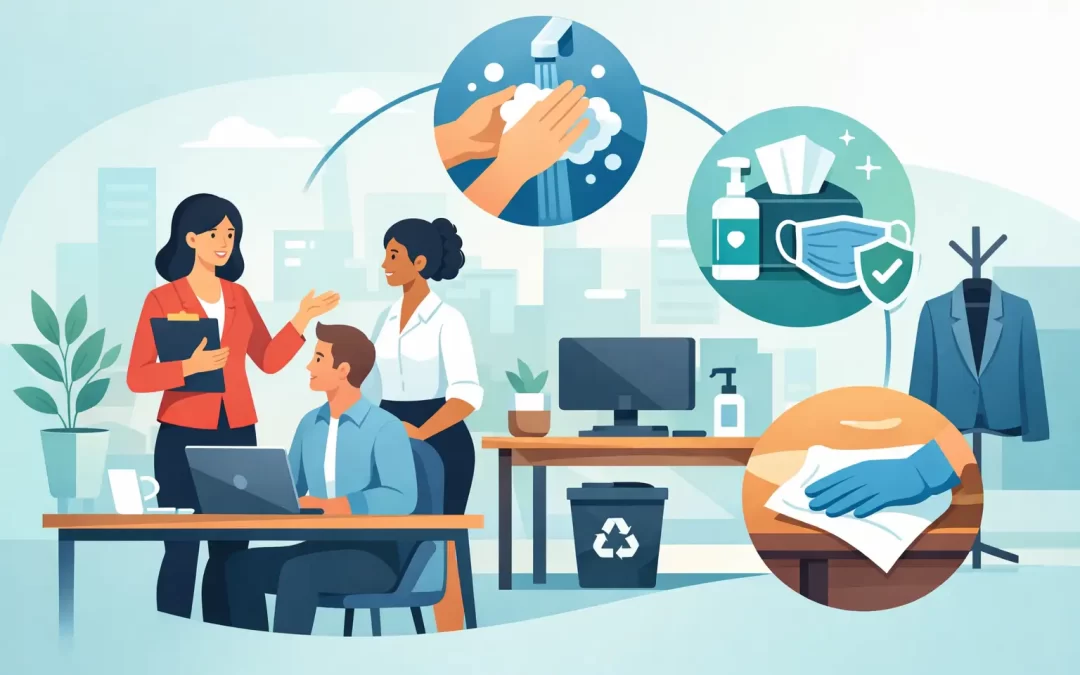
A failed hygiene check rarely starts with a major issue. More often, it starts with a restroom soap dispenser left empty, shared desks not disinfected properly, or a cleaning schedule that exists on paper but not in practice. That is why an office hygiene compliance guide matters – not as a box-ticking exercise, but as a practical system that protects staff, visitors, and the business itself.
For facilities managers, property teams, and business owners, compliance is not just about looking clean. It means being able to show that the workplace is maintained to a consistent standard, that risks are managed, and that staff have the right support to keep shared spaces hygienic. The details matter because inspectors, clients, and employees tend to notice the same things: washrooms, kitchens, touchpoints, waste handling, and whether standards slip when the office gets busy.
What office hygiene compliance actually covers
An office hygiene compliance guide should start with a simple point: compliance is broader than routine cleaning. It includes cleaning frequency, product suitability, safe chemical handling, waste control, washroom standards, staff welfare provisions, and documented procedures. In many offices, responsibility is split between cleaning contractors, internal facilities staff, office managers, and procurement teams. When ownership is unclear, standards usually become inconsistent.
The compliance side has two layers. First, there is the visible standard – clean floors, sanitized restrooms, stocked consumables, tidy kitchens, and dust-free work areas. Second, there is the operational standard behind it – risk assessments, training records, product data, cleaning logs, and supply monitoring. A workplace can appear clean on the surface and still fall short if those systems are missing.
That is why good hygiene management is usually process-driven, not reactive. If a business only responds when there is a complaint, it is already behind.
The areas that create the most risk
Most offices do not struggle because every area is difficult. Problems usually come from a handful of high-use zones. Washrooms are the obvious example. They require regular cleaning, restocking, odor control, safe waste disposal, and close monitoring throughout the day in higher-traffic buildings. A washroom that runs out of hand soap or paper products is not a small issue. It directly affects hygiene compliance.
Break rooms and kitchens are another weak point. Shared appliances, sink areas, counters, cabinet handles, and dining tables collect constant hand contact. If food waste is not removed properly or drains are neglected, odors and contamination follow quickly. In many offices, the kitchen looks acceptable in the morning and falls apart by mid-afternoon. Compliance planning needs to reflect real usage, not ideal conditions.
Workstations are more complicated than they seem. Some businesses assume desk cleaning is straightforward, but shared equipment changes the picture. Keyboards, phones, mice, chair arms, meeting room controls, and touchscreens need a clear cleaning approach, especially in hybrid offices where different people use the same setup across the week. Specialty items such as keyboards and electronics also require the right products and methods. Over-wetting equipment or using the wrong chemical can create a different kind of risk.
Reception areas, elevators, stair rails, door plates, and conference rooms also deserve attention because they shape first impressions and carry a high frequency of contact. If your front-of-house area is visibly maintained but washrooms and back-of-house spaces are neglected, the standard does not hold.
Building an office hygiene compliance guide that works
The most useful guide is one that your team can actually follow. It should define what gets cleaned, how often, by whom, with what product, and how completion is recorded. That sounds basic, but many offices still rely on informal assumptions. One person thinks the day porter handles kitchen checks. The cleaning contractor assumes site staff will report low stock. Procurement expects someone else to monitor consumables. The result is gaps.
Start by dividing the office into zones and matching each zone to risk and usage. A boardroom used twice a week does not need the same schedule as a restroom used by staff and visitors all day. High-touch areas may need multiple service points during business hours, while lower-use spaces can sit on a less frequent schedule. Compliance improves when frequency matches reality.
Documentation should be simple enough to maintain consistently. A complicated reporting system often looks impressive at setup and then gets ignored. Daily check sheets, periodic audit forms, incident reporting, and consumable stock records are usually enough if they are reviewed properly. What matters is not paperwork for its own sake. It is being able to prove that standards were set, carried out, and checked.
Supplies and chemicals are part of compliance
A surprising number of hygiene failures come down to supply management. A site may have a strong cleaning team, but if soap, paper towels, toilet tissue, liners, sanitizer, PPE, or approved chemicals are not available when needed, standards drop fast. Offices that treat supplies as a last-minute purchasing task usually see recurring problems.
The better approach is to align cleaning operations with a planned supply system. That means choosing suitable products for each task, storing them safely, training staff on their use, and monitoring stock before shortages happen. It also means avoiding a mismatch between the products purchased and the surfaces being cleaned. Not every disinfectant is right for every environment, and stronger is not always better. Some products damage finishes, create residue, or are unsuitable around sensitive equipment.
For larger or multi-site offices, standardizing products across locations can help with training, consistency, and procurement control. It reduces confusion and makes it easier to spot where usage patterns are unusual.
Training is where compliance becomes consistent
Even a well-written office hygiene compliance guide will fail if the people carrying it out have not been trained properly. That includes cleaning operatives, day staff, and in some cases office employees who share responsibility for kitchen etiquette, desk clear-down, or reporting hygiene issues.
Training should cover task method, chemical safety, dilution where relevant, color-coding systems, waste segregation, and what good looks like in each area. It should also address escalation. Staff need to know what to do when they find a blocked restroom, a body fluid spill, pest activity, damaged dispensers, or a supply failure.
There is also a practical side to training that often gets overlooked: speed versus quality. Teams under time pressure tend to focus on visible surfaces first. That is understandable, but it can leave touchpoints, undersides, corners, and equipment neglected. Clear standards, realistic time allocation, and regular supervision do more for compliance than simply asking staff to work faster.
Audits, inspections, and the gap between paper and reality
The reason audits matter is simple. Standards drift. A site that performs well in month one can decline by month three if supervision is light, occupancy rises, or supply issues begin to affect service. Regular inspections catch that early.
An effective audit should test both appearance and evidence. Is the washroom clean, stocked, and odor-free? Are the cleaning logs completed accurately? Are the right products in the janitorial closet? Are staff using PPE where needed? Are touchpoints actually being disinfected at the stated frequency? If the records say one thing and the condition of the site suggests another, the process needs attention.
It also helps to audit at different times of day. A morning inspection may show a spotless office right after service. A lunchtime or late-afternoon inspection often reveals whether the hygiene plan is built for real traffic.
For businesses with compliance-sensitive clients or regulated environments, it is worth having a cleaning partner that understands both service delivery and audit readiness. Aaroma works with this kind of practical standard in mind – keeping day-to-day cleaning, specialist hygiene work, and supply support aligned so clients are not trying to manage each part separately.
Common mistakes that undermine compliance
One of the biggest mistakes is under-scoping the job. If cleaning hours, day support, or consumable volumes do not match occupancy, the site will always feel one step behind. Another common problem is relying on periodic deep cleaning to compensate for weak daily standards. Deep cleaning has value, but it cannot replace routine control.
There is also the issue of shared responsibility. When everyone has partial ownership, nobody has full ownership. Offices perform better when one person or team is accountable for hygiene oversight, even if several vendors or departments are involved.
Finally, many businesses review hygiene only when something goes wrong. Complaints, failed inspections, staff illness concerns, and client comments usually arrive after standards have slipped for some time. A stronger approach is to review before there is a visible problem.
Making compliance practical, not burdensome
The best office hygiene compliance guide is one that fits the building, the headcount, and the way the office is actually used. A small professional office, a busy serviced workspace, and a multi-floor corporate site do not need identical systems. What they do need is clarity, consistency, and enough oversight to keep standards from slipping when the routine gets pressured.
Good compliance is rarely dramatic. It shows up in stocked washrooms, clean touchpoints, safe kitchens, accurate records, and staff who know what to do without guessing. When that foundation is in place, hygiene stops being a recurring problem and becomes part of how the workplace runs every day.
If you are reviewing your current setup, start with the places where complaints tend to begin. That is usually where the real compliance picture shows itself.