
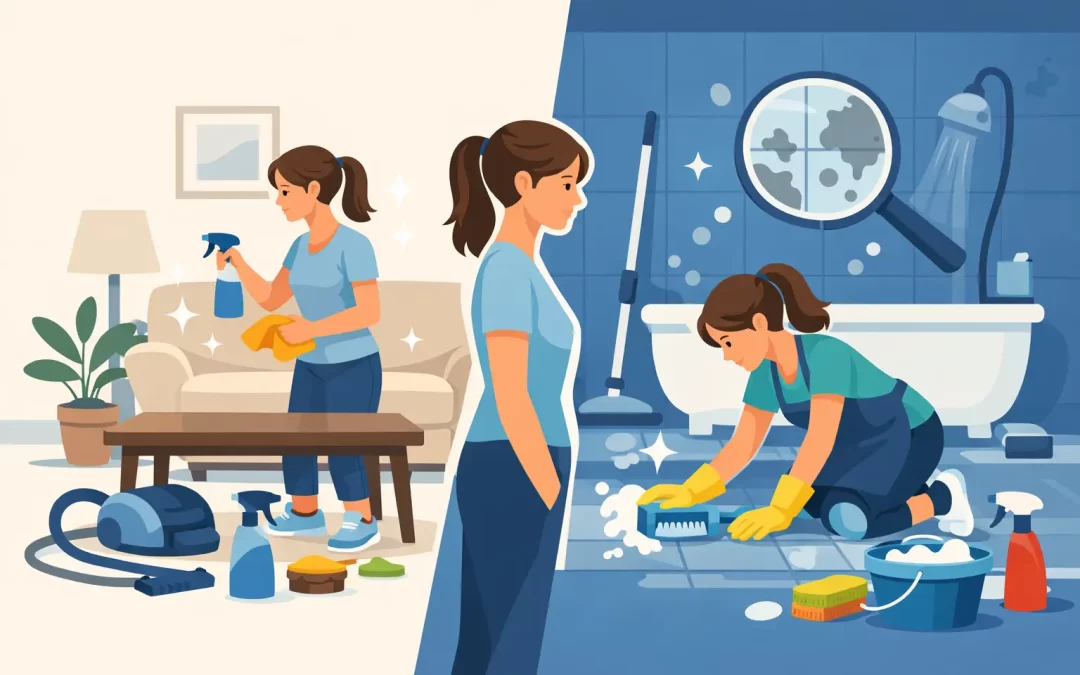
A property can look tidy at first glance and still need far more than a routine clean. Dust gathers behind furniture, grease settles inside kitchen cabinets, and high-touch surfaces can be overlooked when time is limited. Understanding house cleaning vs deep cleaning helps homeowners, landlords, property managers, and busy families choose the service that will deliver the standard they actually need.
The right choice is not always about how dirty a space appears. It depends on how the property is used, how long it has been since a detailed clean, whether occupants have allergies or health concerns, and whether a move, inspection, event, or change of season is coming up.
House Cleaning vs Deep Cleaning: The Main Difference
Routine house cleaning is designed to maintain a clean, comfortable, and presentable home on a regular schedule. It focuses on the surfaces and rooms people use most often. A weekly or biweekly visit prevents everyday dirt, crumbs, dust, and bathroom buildup from becoming a larger job.
Deep cleaning is a more detailed service that targets areas not normally covered during routine visits. It involves additional time, more intensive work, and close attention to buildup in hard-to-reach places. The goal is to reset the condition of the home rather than simply maintain it.
Neither service is automatically better. Regular cleaning is the practical choice for keeping a well-maintained home under control. Deep cleaning is the right response when routine work is no longer enough, or when the property needs to meet a higher standard before a specific occasion.
What Is Usually Included in Routine House Cleaning?
A standard house cleaning service concentrates on visible areas and everyday hygiene. In living spaces and bedrooms, this normally includes dusting accessible surfaces, vacuuming carpets and rugs, mopping hard floors, emptying trash, and wiping commonly used touchpoints.
Bathrooms receive routine attention to toilets, sinks, showers, mirrors, and floors. In kitchens, cleaners typically wipe counters, clean the sink, address the stovetop exterior, remove food debris, and clean the floor. The exact scope should always be agreed before service begins, especially in homes with pets, large families, or high-use kitchens.
Routine cleaning works best when it is consistent. A weekly schedule may suit a busy household, a short-term rental, or a property with children and pets. A biweekly schedule may be enough for a smaller household that keeps up with basic tasks between visits. The value comes from preventing dirt from settling in, which also helps protect flooring, fixtures, and furnishings over time.
What Does a Deep Cleaning Cover?
Deep cleaning reaches beyond the visible surfaces handled during standard service. It is more thorough because it deals with accumulated soil, grease, dust, and residue in neglected or difficult areas. Depending on the property and agreed scope, a deep clean may include:
- Detailed cleaning of baseboards, doors, frames, vents, light fixtures, and switches
- Cleaning behind and beneath accessible furniture and appliances
- Removal of grease buildup from kitchen surfaces, cabinet fronts, and appliance exteriors
- Detailed bathroom work around tile, grout, shower screens, fixtures, and hard-water marks
- Interior cleaning of cabinets, drawers, refrigerators, ovens, or other appliances when requested
- Extra attention to blinds, window sills, upholstery, carpets, and high-touch areas
A professional deep clean is not a quick version of standard cleaning. It takes longer because each room is inspected and worked in greater detail. Some tasks, such as carpet extraction, blind cleaning, window cleaning, or oven cleaning, may require specialist equipment or be priced separately. Clear expectations prevent surprises and make sure the service addresses the areas that matter most.
When Routine Cleaning Is the Right Choice
Choose routine house cleaning when the home is already in reasonable condition and the main goal is to keep it that way. It is particularly effective for households that need dependable help with recurring chores but do not require intensive restoration work.
This option is also well suited to property managers overseeing occupied units. Regular cleaning between inspections can help maintain standards, reduce complaints, and identify minor maintenance issues before they become more expensive. For workplaces with residential-style common areas, such as staff kitchens or managed accommodation, recurring service supports hygiene without disrupting daily operations.
Routine cleaning is often the better value when the property has recently been deep cleaned. Once a high standard is established, scheduled maintenance is usually more cost-effective than waiting until buildup requires another full reset.
When a Deep Clean Makes More Sense
A deep clean is often needed after a long gap in professional cleaning or when a property has experienced heavier-than-normal use. Moving into a new home, preparing a rental for new occupants, finishing renovation work, hosting a major event, or returning to a property after vacancy are common examples.
It is also a sensible choice when cleaning has been handled inconsistently. A home may have clean countertops and freshly vacuumed floors, yet still have dust behind radiators, grease on cabinet tops, soap residue in showers, or marks around switches and door handles. These details affect both hygiene and the overall impression of the space.
For landlords and property managers, deep cleaning can protect the condition and marketability of a unit. For homeowners, it can make routine upkeep easier again. For facilities teams, the same principle applies in offices and shared spaces: periodic detailed cleaning supports the work done by daily or weekly contract cleaning.
How Often Should You Schedule a Deep Clean?
There is no single schedule that fits every property. Many homes benefit from a deep clean once or twice a year, often in spring, before the holidays, or ahead of a major life event. Properties with pets, smokers, young children, frequent guests, or high kitchen use may need it more often.
A rental property may need a deep clean at tenant turnover, while a home preparing for sale may need one before photography and viewings. After construction, decorating, or repair work, a post-project deep clean is usually necessary to remove fine dust and residue that ordinary cleaning cannot fully address.
The practical test is simple: if routine cleaning no longer produces a visibly fresh result, it is time for a deeper service. Waiting too long can allow grease, hard-water deposits, stains, and embedded soil to become harder and more expensive to remove.
Cost, Time, and Value Considerations
Deep cleaning costs more than routine house cleaning because it requires more labor, more time, and sometimes specialist products or equipment. That does not mean it is poor value. When properly planned, a deep clean can extend the life of carpets, floors, appliances, and bathroom fixtures by removing the buildup that causes staining, odors, and surface wear.
The best way to control cost is to be clear about priorities. If the kitchen and bathrooms need the most attention, say so. If interior cabinets, blinds, carpet cleaning, or appliances are required, include them in the scope rather than assuming they are part of a standard service. A professional provider should explain what is included, identify any specialist requirements, and give a clear price before work starts.
It also helps to consider the cost of lost time. A detailed whole-home clean can take many hours for one person, often with results limited by household-grade equipment. Professional teams bring trained staff, appropriate products, and an organized process that can make the work more efficient and consistent.
Getting the Best Result From Either Service
Before a cleaning visit, remove personal clutter from floors, counters, and furniture where possible. This gives cleaners access to the surfaces that need attention and keeps time focused on cleaning rather than organizing belongings. Tell the team about delicate finishes, pet areas, allergies, access instructions, or rooms that should not be entered.
For deep cleaning, walk through the property in advance and identify concerns such as grease, mold-prone areas, stains, pet hair, or stubborn odors. Photos can be useful when requesting a quote for a vacant property, move-out clean, or larger job. The more accurate the information, the more reliable the service plan and estimate will be.
A clean property should feel easier to live or work in, not just look better for a day. Start with a deep clean when the space needs a proper reset, then use regular house cleaning to protect that result and keep standards where they belong.