
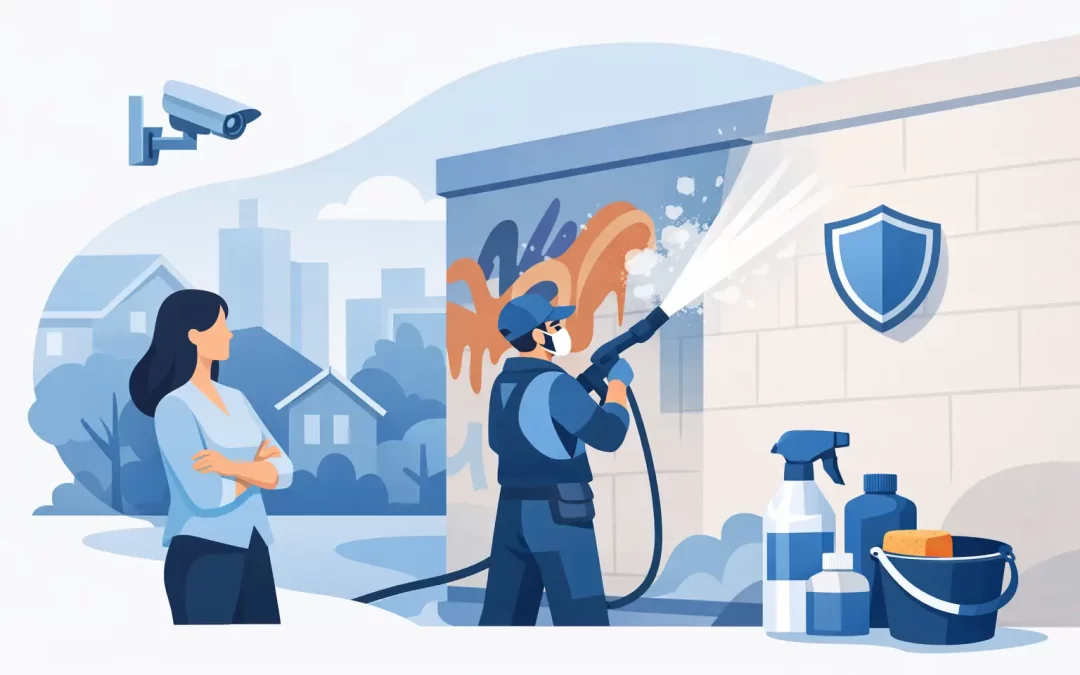
A fresh graffiti tag can change how customers, tenants, and visitors view a property before they walk through the door. Fast, professional graffiti removal restores a clean appearance, but speed should never mean using the wrong chemical, pressure setting, or abrasive method. A rushed attempt can leave behind a larger and more expensive problem than the original marking.
For facilities managers and property owners, the goal is not simply to make paint disappear. It is to remove it safely, protect the underlying material, keep public areas presentable, and reduce the likelihood of repeat vandalism.
Why Prompt Graffiti Removal Matters
Graffiti is often treated as a cosmetic issue, but it can have operational consequences. Marked storefronts, entrances, walls, shutters, fences, and public-facing equipment can make a site appear unmanaged. For commercial premises, that can affect customer confidence. For residential developments, it can lead to tenant complaints and put added pressure on property management teams.
Prompt removal also matters because paint becomes harder to remove as it cures. Fresh markings may be lifted with a suitable graffiti remover and controlled rinsing. Once paint has bonded to porous masonry, textured concrete, untreated wood, or aged metal, the work can require more time, specialist products, and careful repeat treatments.
There is also a practical prevention benefit. Sites where graffiti remains visible for long periods can become repeat targets. Removing it quickly sends a clear message that the property is actively maintained.
Graffiti Removal Starts With the Surface
There is no single method that works safely on every wall or structure. Professional graffiti removal begins with identifying both the marking and the surface beneath it. Spray paint, marker ink, paint pens, stickers, and adhesives each respond differently to cleaning agents.
The surface is equally important. Smooth glazed tile, glass, sealed metal, and powder-coated shutters can often tolerate a more direct cleaning approach than brick, sandstone, painted render, timber, or historic masonry. Porous surfaces absorb paint below the visible layer, while older or weathered finishes may be damaged by aggressive products or high pressure.
A small test area should be completed before the main work begins. This confirms whether the chosen remover is effective and whether it affects the surface color, finish, or protective coating. Testing may seem like an extra step, but it is one of the best ways to avoid uneven patches, ghosting, and unnecessary repairs.
Common Surface Risks
High-pressure washing is useful in the right conditions, but it is not automatically the best answer. Too much pressure can drive paint deeper into masonry, strip mortar, damage render, lift existing paint, or force water behind cladding and seals. Hot water can improve cleaning results on durable surfaces, but it may also affect delicate coatings or soften certain materials.
Strong solvents carry their own risks. They can stain plastic, dull painted metal, damage sealants, and create runoff concerns. A product that removes graffiti effectively on a steel security shutter may be unsuitable for a painted wall beside it. The right method depends on the surface, the age of the graffiti, the surrounding materials, and where wastewater will go.
A Safe Professional Process for Graffiti Removal
A reliable contractor works in a controlled sequence rather than treating graffiti removal as a one-product job. The first step is to inspect the area for surface condition, access requirements, drainage, electrical fixtures, landscaping, pedestrian routes, and nearby vehicles. This is especially important around busy entrances, loading areas, schools, residential blocks, and public walkways.
The graffiti is then assessed to determine whether it is paint, ink, adhesive, or a combination of materials. A compatible remover is applied in line with the product directions and allowed sufficient dwell time. The cleaner needs time to break down the marking. Scrubbing or rinsing too early can reduce effectiveness and increase the risk of spreading pigment across the surface.
After treatment, the area is carefully agitated where required and rinsed using an appropriate method. Some surfaces need low-pressure rinsing, while others can withstand controlled power washing. Stubborn marks may require several light treatments rather than one aggressive attempt. This approach often delivers a better finish and helps preserve the surface.
The final stage is inspection. A good result means more than removing the main tag. The technician should check for shadows, overspray, pigment trapped in texture, chemical residue, and inconsistencies in the surrounding finish. Where full removal would risk surface damage, repainting or localized coating repair may be the more cost-effective option.
When DIY Graffiti Removal Can Cost More
Small marks on a durable, non-porous surface may be manageable with the correct product and a careful test patch. However, DIY removal is rarely the best choice for large areas, high-level work, public-facing buildings, porous masonry, specialty finishes, or properties with multiple affected surfaces.
The most common mistake is choosing a harsh solvent or powerful pressure washer before understanding the wall material. Another is using household cleaning products that do not dissolve the paint but discolor the surface around it. A pale patch on brick or a stripped area on a painted shutter can be more noticeable than the original graffiti.
There are safety considerations as well. Chemical cleaners may require gloves, eye protection, ventilation, and controlled handling. Runoff must be managed responsibly, particularly near drains, landscaped areas, or pedestrian spaces. Access equipment, traffic management, and work-area protection may also be necessary depending on the location.
For managed sites, professional service also creates a clearer maintenance record. This can be useful when tracking recurring vandalism, reporting incidents, budgeting for repairs, or coordinating with security teams and insurers.
Preventing Repeat Graffiti Damage
No prevention method can guarantee that a property will never be targeted, but practical measures can reduce both the likelihood and the cost of repeat incidents. Visibility is a strong starting point. Well-lit entrances, service yards, alleyways, and boundary walls are less attractive to vandals than dark, hidden areas.
Anti-graffiti coatings can be worthwhile on surfaces that are regularly affected. Sacrificial coatings are designed to be removed along with the graffiti and reapplied afterward. Permanent coatings provide a protective barrier that can allow future markings to be cleaned more easily. The best choice depends on the surface type, how often graffiti occurs, the desired appearance, and the planned maintenance budget.
Property teams should also look at the surrounding environment. Overgrown shrubs, poorly placed bins, unsecured access points, and blind spots can make vandalism easier. Regular exterior cleaning helps staff notice new damage sooner, while prompt reporting and removal support a well-maintained site standard.
For businesses with several locations or a large estate, it helps to set a simple response process. Record the location and time of discovery, take photographs if required, assess whether the graffiti is offensive or urgent, and arrange removal using an approved method. Consistency prevents minor issues from becoming prolonged property damage.
Choosing a Graffiti Removal Provider
The lowest quote is not always the best value if it relies on a single aggressive method for every surface. Look for a provider that can explain how they will assess the material, protect surrounding areas, manage chemicals and wastewater, and verify the finished result.
Experience with exterior cleaning and surface care matters because graffiti work often overlaps with power washing, repainting, gum removal, facade cleaning, and ongoing property maintenance. A contractor with proper insurance, trained operatives, and clear safety procedures can reduce disruption while protecting your building fabric.
Aaroma brings more than 25 years of cleaning and maintenance experience to specialist exterior work, supporting property owners and facilities teams with practical service standards and value-focused results. For sites with recurring issues, combining graffiti removal with planned exterior maintenance can make response times easier to manage and keep the property looking consistently cared for.
The best time to plan graffiti removal is before the next incident. Identify vulnerable surfaces, agree on an approved response method, and keep a trusted professional ready to act. When a mark appears, a prompt and surface-safe response protects more than the wall – it protects the standard people associate with your property.